

In 2022, University of Zurich scientists studying gut health ran a test they thought would show nothing.
They took the chemical residue left on dishes after a commercial dishwasher cycle and diluted it 10,000 times.
So weak it should've been harmless.
Then they exposed human gut cells to it…
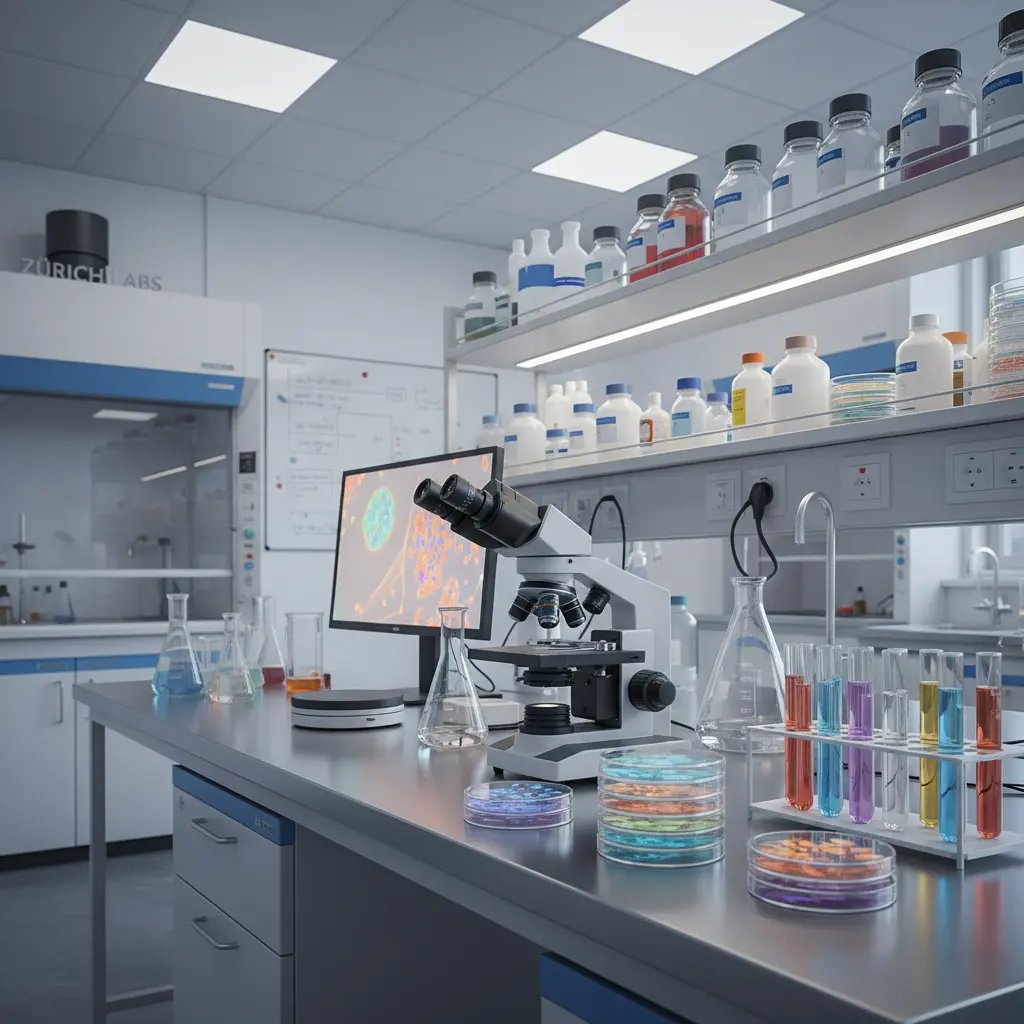
University of Zurich, 2022 — Residue diluted 10,000x still damaged human gut cells
And the results were alarming.
Even at that extreme dilution, the residue severely damaged the intestinal barrier, killed cells, and triggered inflammatory responses.
When they analysed what caused it, they found the culprit was alcohol ethoxylates — the same surfactants used in most dishwashing products across UK households.
And if you're one of the 13 million households washing dishes by hand, you're getting far higher exposure than anyone in that study.
Why Hand-Washers Are Getting The Worst Of It
The study focused on commercial dishwashers — industrial machines in restaurants and school canteens that skip the final rinse.
They're now studying home dishwashers and early findings suggest similar effects at lower concentrations.
But hand-washing is different. And there's 3 things that multiply your exposure:

You overdose.
That big squeeze into your sink? Research from The University of Bonn found that's 3 to 5 times more product than needed. The excess doesn't make dishes cleaner. It just leaves more residue.
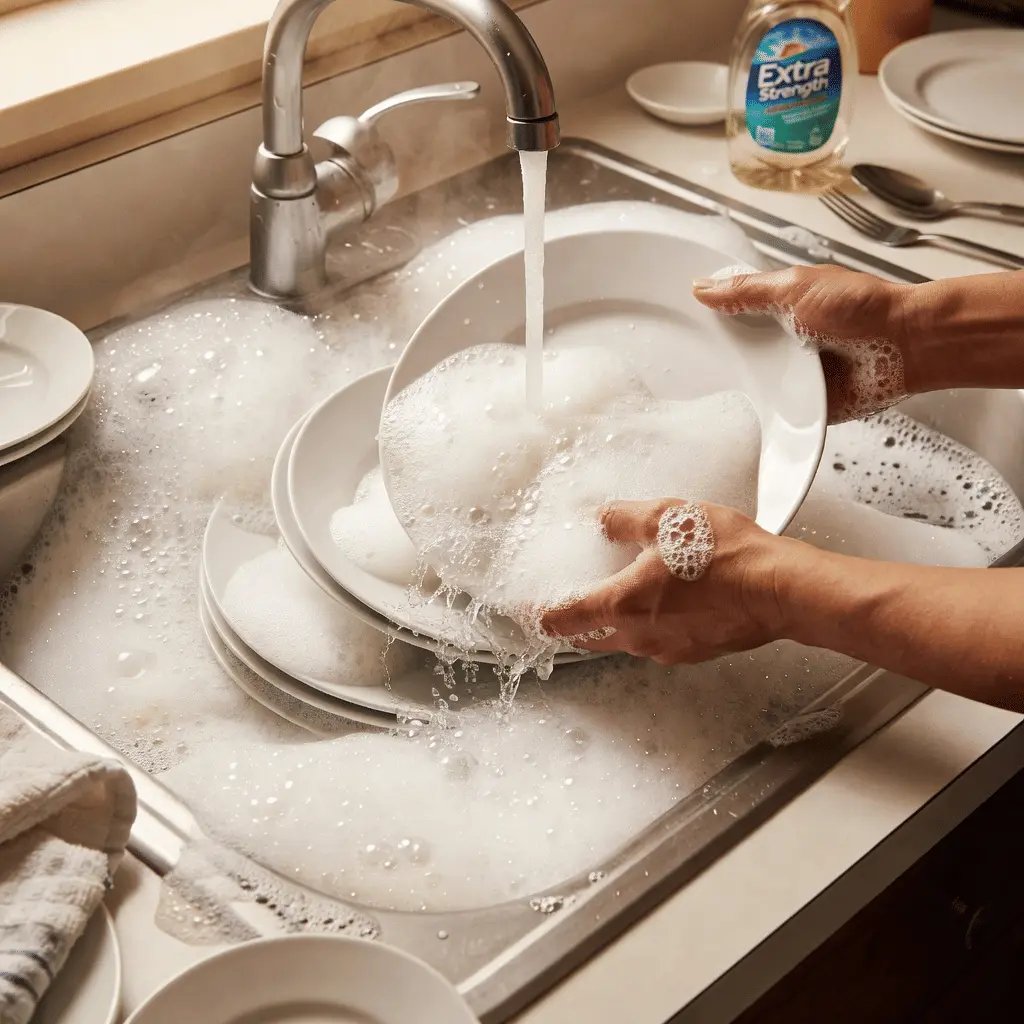
3–5x more product than needed — and all that excess stays on your plates
You also under-rinse.
Dishwashers use high-pressure jets at 60–70°C through multiple cycles. Your tap? A single lukewarm stream for a few seconds per plate. To rinse as thoroughly as a dishwasher, you'd need six fresh basins of water — and most people don't even change it once.
And you wash constantly.
Machine users run one cycle daily. You're hand-washing 2 to 3 times per day, sometimes more — multiplying the exposure with every meal.
Hand-washers are getting residue exposure that dwarfs machine users.
See The Zero-Residue Solution
What Alcohol Ethoxylates Actually Do To Your Gut
These chemicals stick to grease and oils. They work by binding to fats to lift them away.
But they don't discriminate between grease on your pan and the protective lining of your gut.
Here's what the University of Zurich researchers identified:
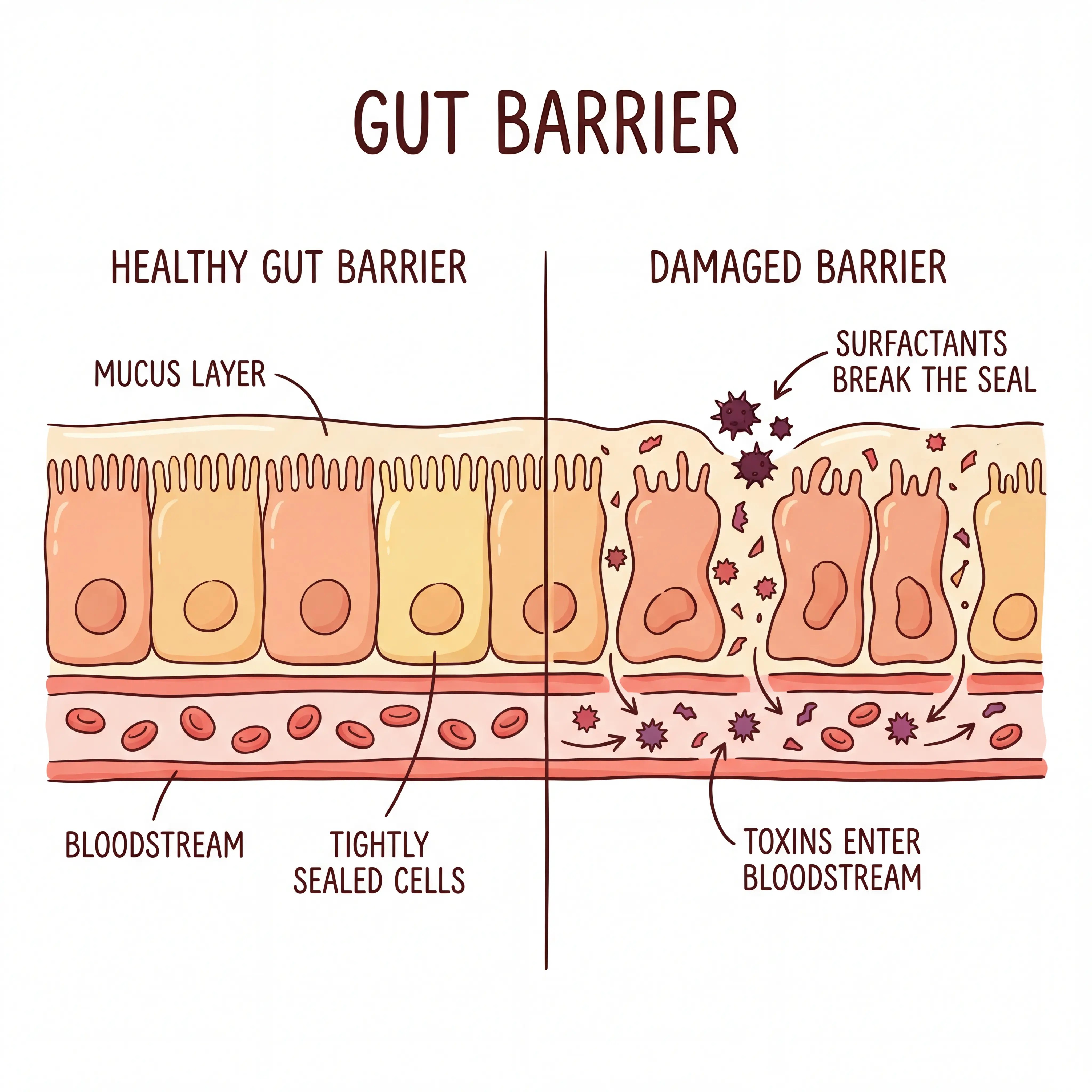
When these surfactants contact your gut lining, they break apart the seal between your gut cells — like pulling bricks out of a wall.
Big brands and eco-friendly options alike — most contain the same alcohol ethoxylates
So your gut barrier starts letting things through that should stay out.
Partially digested food particles…
Bacteria…
Toxins…
All of which can slip into your bloodstream.
Your immune system treats these as invaders and starts attacking them — which causes swelling and irritation throughout your body.
In other words, your gut becomes inflamed and stops working properly.
All from residue levels you'd encounter on supposedly "clean" dishes.
The Invisible Film On Every Plate
You've probably experienced this without realising what it was.
That slight soapy taste when you drink from a "clean" glass.
The squeaky feeling on dried dishes.
That's not clean. That's chemical friction.
Sometimes you may notice it but most of the time you don't.
But if you're overdosing on detergent and under-rinsing, the film is there.
A microscopic layer of chemicals coating every surface.
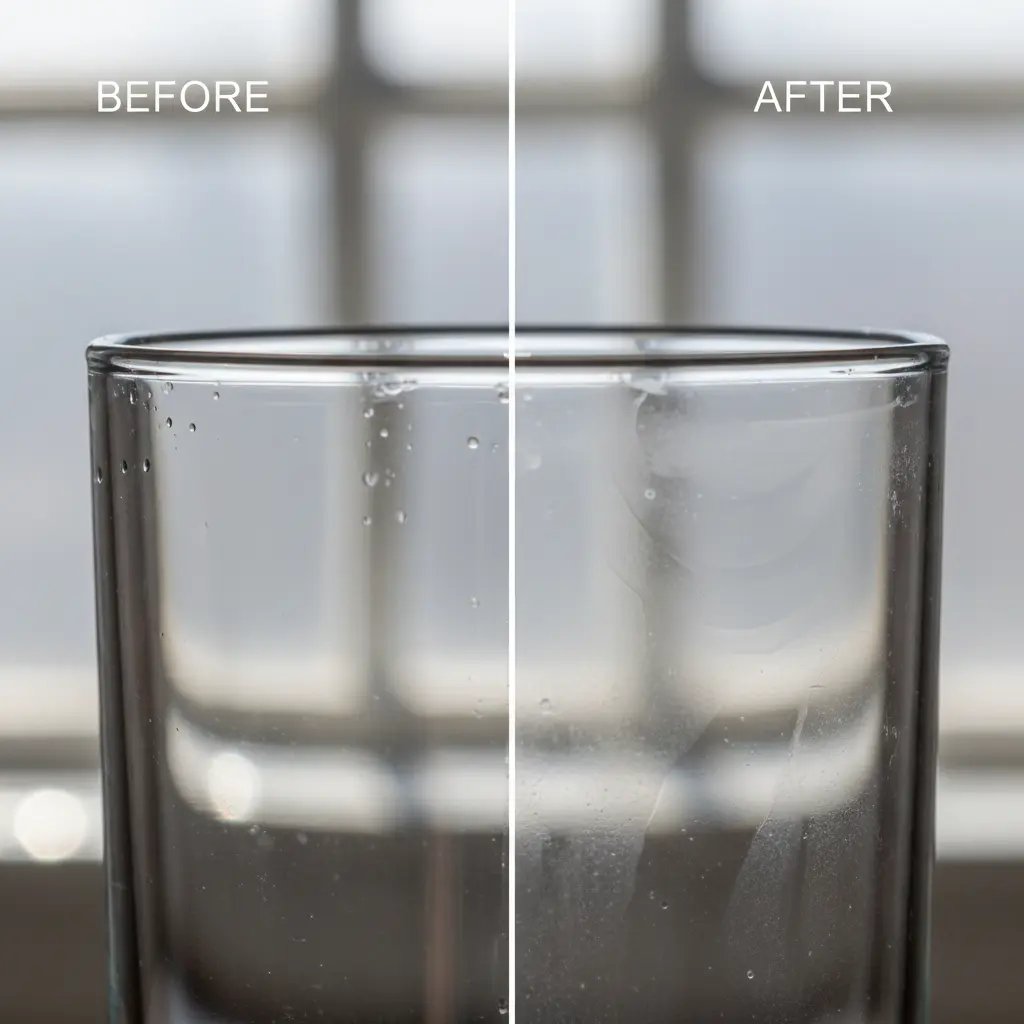
The invisible chemical film coating your "clean" dishes — clinging to every surface
Clinging to the rim of your coffee mug.
Spread across your dinner plate.
On the spoon you put in your mouth.
On the bowl your toddler licks clean.

Every meal — trace amounts of surfactants never meant for human consumption
Every meal, you're ingesting trace amounts of surfactants never meant for human consumption.
Your Gut Problems Might Not Be About Food
You've probably been blaming the wrong thing.
The bloating after meals.
The random food sensitivities that seem to appear out of nowhere.
The digestive issues that just won't go away no matter what you try.
 You've cut out gluten and dairy.
- Tried elimination diets.
- Spent a fortune on probiotics and supplements.
- Read books about healing your gut lining.
And some days are better — but the problems always come back.
Here's what no one's told you:
You can't heal a gut barrier whilst continuously exposing it to the chemicals that break it down.
If you're hand-washing with conventional washing up liquid, you're doing exactly that.
The alcohol ethoxylates that the Zurich study found damage gut cells? You're ingesting them with every meal.
Not because you're doing anything wrong.
Because no one thought to warn you that the residue on your "clean" plates could be the problem.
Why Hand-Washers Can't Escape This
Pick up any washing up liquid in your kitchen and check the back.
You'll probably see "15–30% anionic surfactants" or "5–15% non-ionic surfactants."
Those non-ionics are alcohol ethoxylates. The same compounds that damaged gut cells in the study.
They're in the big brands AND they're in most of the eco-friendly options. Basically everything on the supermarket shelf.
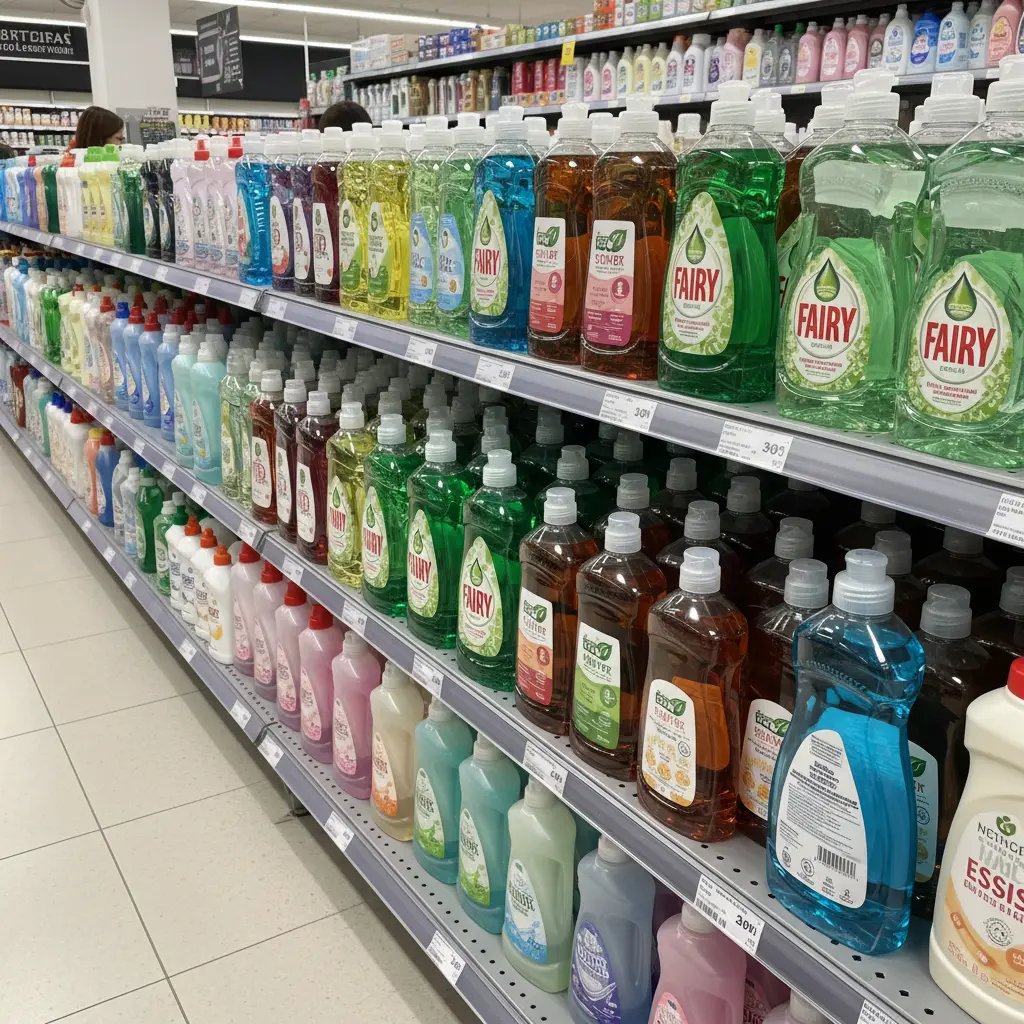
Big brands and eco-friendly options alike — most contain the same alcohol ethoxylates
Here's the problem:
These chemicals are designed to stick. That's how they cut through grease.
When you hand-wash, you'd need to hold each plate under scalding water for 30 seconds to rinse them properly. Your hands can't take it. So you don't.
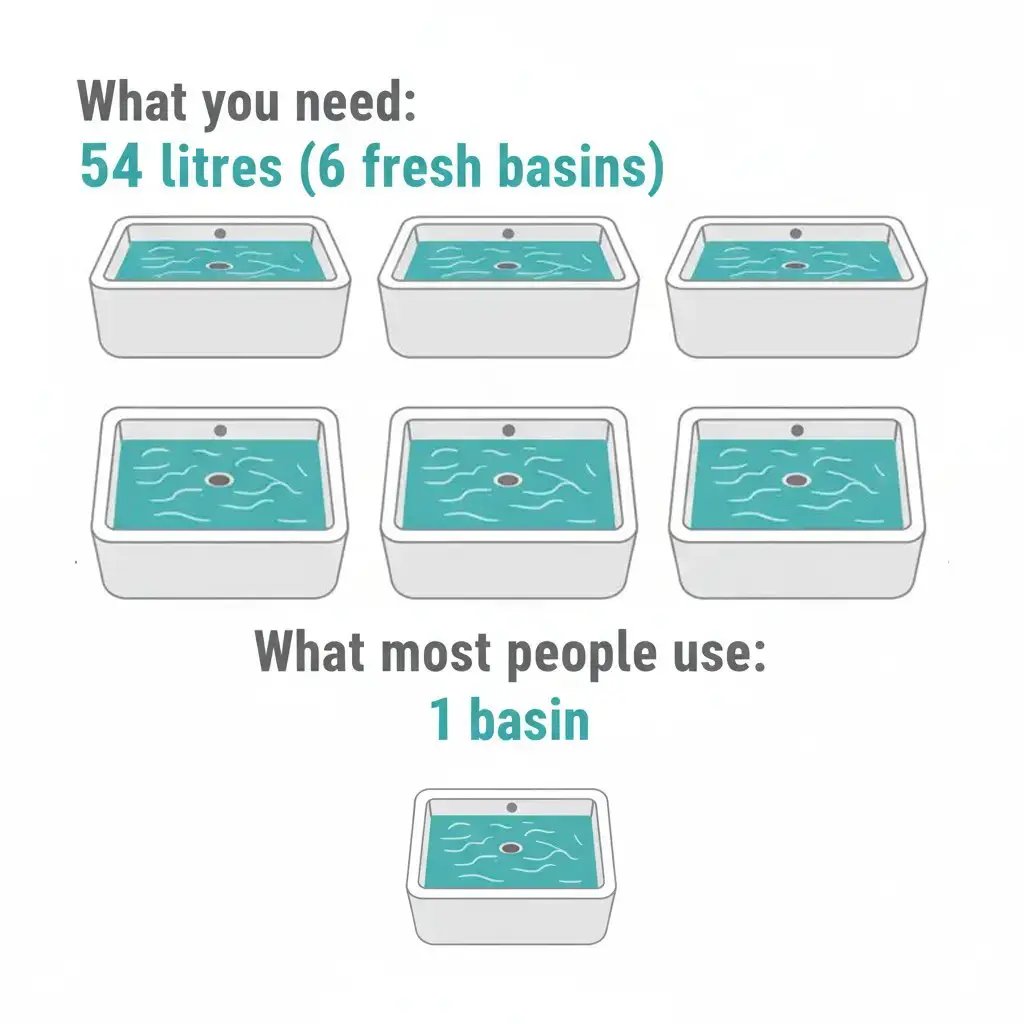
54 litres needed to properly rinse — most people use a fraction of that
54 litres
of fresh water needed to properly rinse a full sink of dishes — that's 6 fresh basins
You probably use 1. Maybe 2 if you're being thorough.
The surfactants designed to cling to grease don't stop clinging. They stay on your plates, then transfer to your gut lining with every meal.
You can't rinse your way out of this with these products.
30-day money-back guarantee
Why This Hasn't Been News
The science is new — only published in 2022.
It got some coverage in health blogs and scientific circles, but it hasn't hit mainstream awareness.
Also, regulations tend to move slowly.
Alcohol ethoxylates passed safety tests decades ago based on acute toxicity — which essentially means "will this harm you immediately if swallowed?"
They passed with no issues.
But what about eating trace amounts off your plates every single day for 20 years?
It's starting to be studied now, and the findings are making researchers uncomfortable.
It's the same pattern you've seen before with lead paint, BPA in plastic bottles, flame retardants in furniture. All considered safe for decades until the long-term studies caught up. Not because companies were lying — just because the science took time to reveal what chronic exposure actually does.
You Can't Fix This With Current Products
Your first thought is probably "fine, I'll just rinse more thoroughly."
Won't work.
University of Bonn research showed that when you use too much detergent — which most people do — it creates excessive foam that actually clings harder to dishes. The more you use, the harder it is to rinse off.
You'd need to use a tiny amount of product and rinse each item under scalding water for 30 seconds. Your hands can't handle that and honestly, you're not going to stand there timing each plate.
What about switching to an eco-friendly washing up liquid?
You may have already tried one. It either didn't cut through grease properly, cost twice as much, or had that weird earthy smell that lingered on your dishes.
And here's the kicker: most eco brands still use ethoxylated surfactants. They're plant-derived instead of petroleum-based, but the mechanism that damages your gut is still the same.
The problem isn't that you're not trying hard enough. It's that until now, there hasn't been a product actually designed to rinse clean under normal hand-washing conditions.
What Changed?
Someone finally designed a dishwashing product that actually rinses clean for hand-washers.
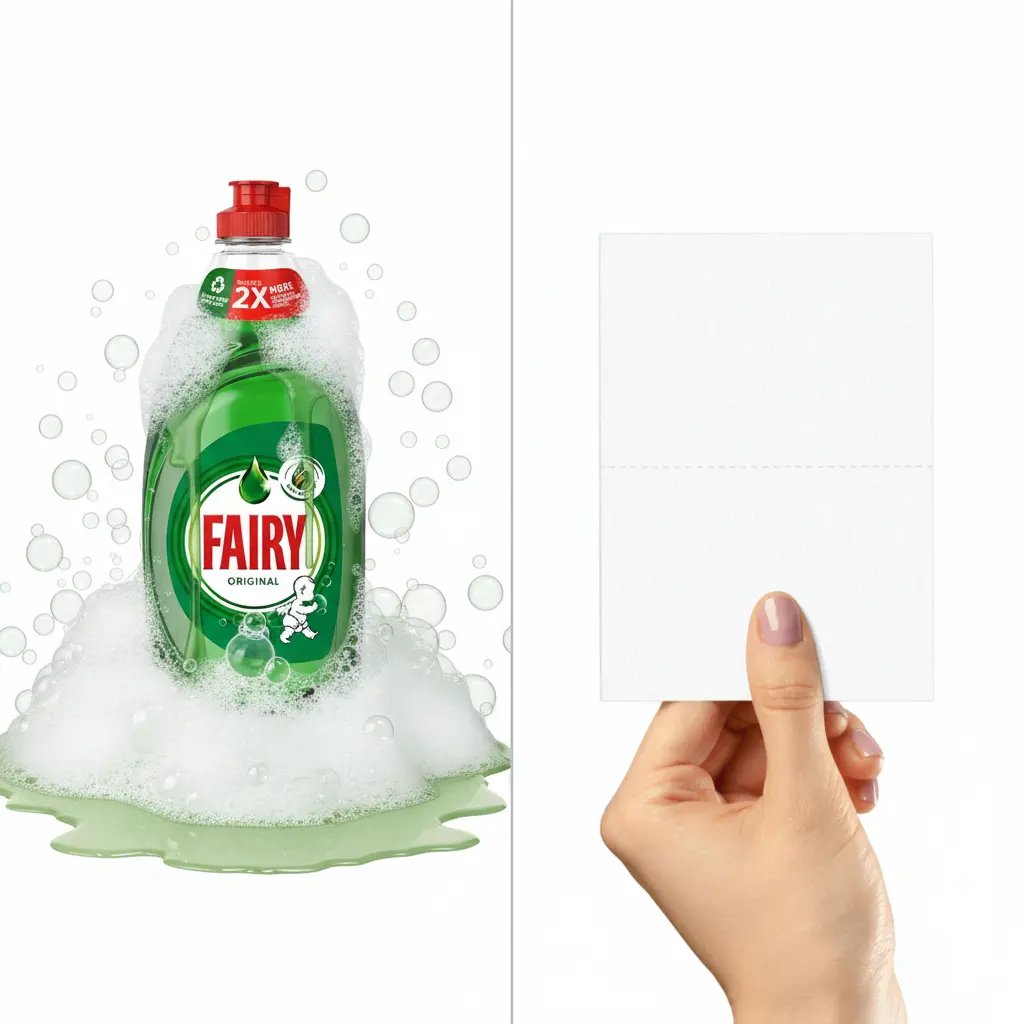
Conventional liquid (left) vs. one Dip sheet (right) — the solution that actually rinses clean
Plant-based & lower-impact surfactants that break down grease and oils without the clinging properties of alcohol ethoxylates. The chemistry is different at a structural level. They do their job, then rinse away completely under normal tap pressure.
No industrial rinse cycle needed. Just your tap, lukewarm water and a few seconds per plate.
Dip is a non-toxic home care brand who introduced the first dishwasher sheets to the UK 2 years ago.
 Why Dip Sheets Are Different
 Pre-measured — you can't overdose
- Plant-derived & lower-impact surfactants that actually rinse away
- Cuts through baked-on grease & oily pans
- Leaves glasses crystal clear — no invisible film
- No sticky cap, no bulky plastic, no guesswork
One sheet dissolves in your basin and that's exactly the right amount for a full sink of dishes. No more guessing, no more that massive squeeze that creates foam you can't rinse off.
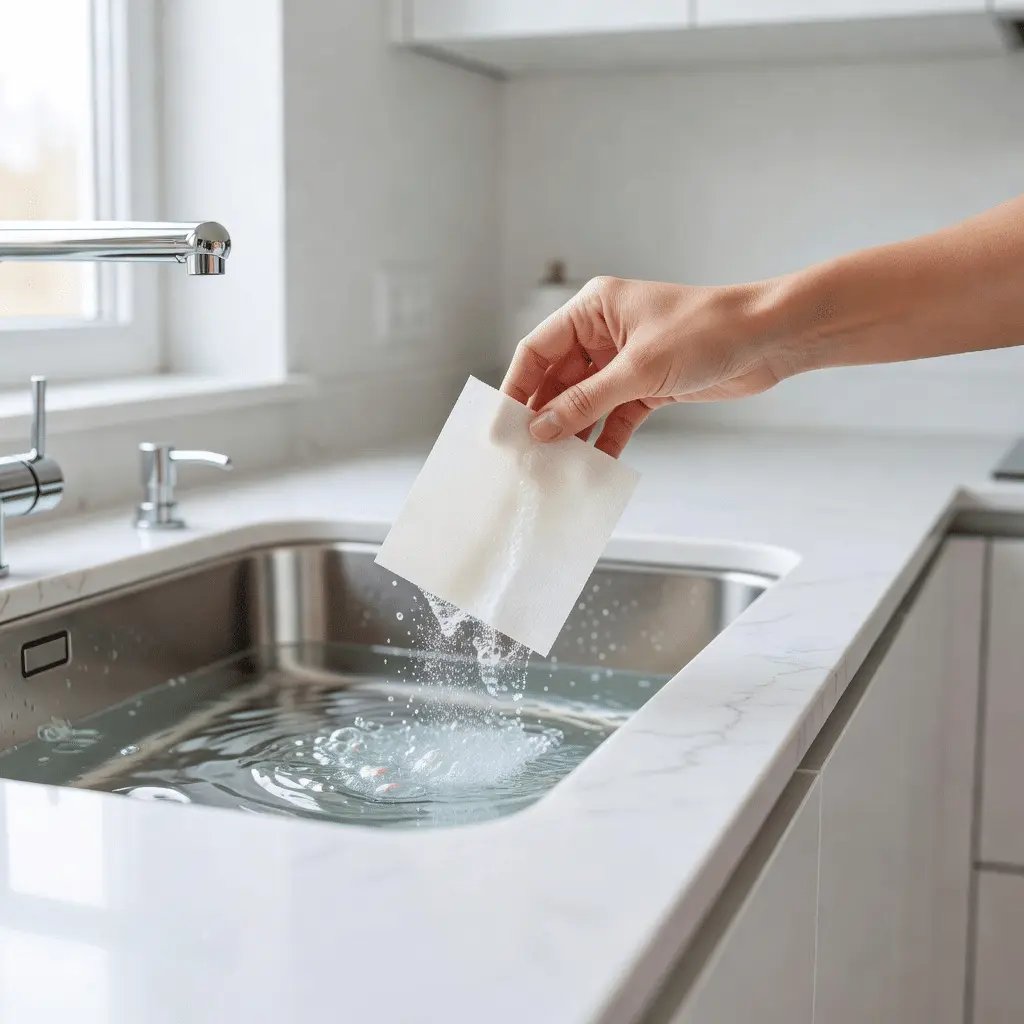
Drop one sheet in your basin — it dissolves in seconds and you wash as normal
Drop one sheet in your basin and watch it dissolve in seconds. Just wash as you usually would and rinse under the tap.
Your dishes come out genuinely clean. Not squeaky-clean from chemical residue. Actually clean.
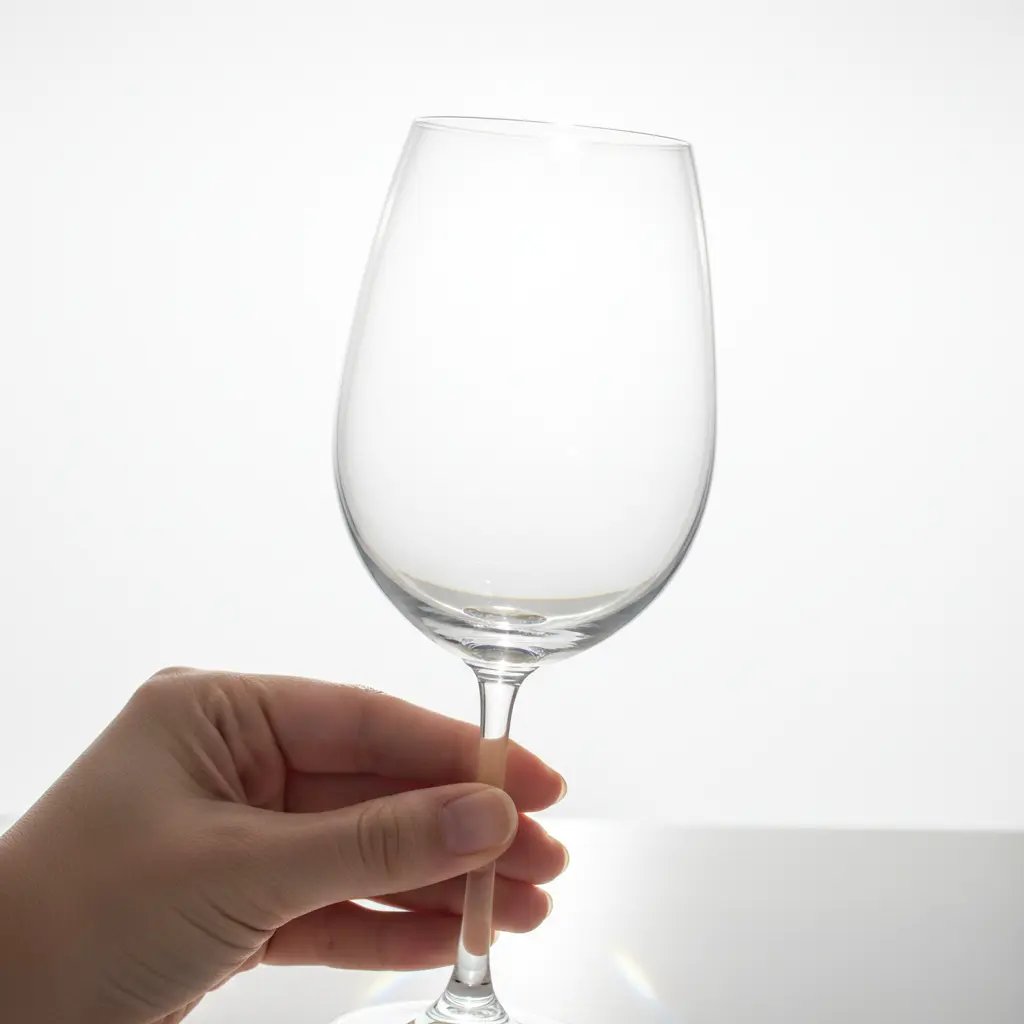
No invisible film. Nothing transferring to your gut. Just genuinely clean.
No invisible film and nothing transferring to your gut when you eat.
And because they're sheets, not liquid in a bottle, there's no sticky cap, no bulky plastic taking up space, no wondering if you're using too much or too little. Just one sheet, one basin, done.
This is what you've been missing. Not another eco liquid that doesn't work. Not another promise that you need to rinse better. A solution that actually addresses the problem.
100% Money-Back Guarantee
Over 60,000 UK families have already made the switch
What People Notice

"I started using dip as I wanted to move away from using harsh chemicals in my dishwasher… I love that dip dishwasher sheets are so gentle you can use them for handwashing dishes."
— Lorraine
"My experience with company has been great I thoroughly recommend them and their products i have used the dishwasher sheets and they work even you wash dishes by hand."
— Christie
"Super handy that it can be used for hand washing…"
— Robert
The Detergent You're Using Isn't The Problem
The washing up liquid you've got under the sink works. That's why it's been there for decades and why most people have the same bottle their parents used.
This isn't some conspiracy about big brands poisoning families or hiding dangers. The research on long-term exposure to these chemicals is just really new. The Swiss study came out in 2022 and most people still haven't heard about it.
Nobody was studying what happens when the same person washes dishes with the same bottle of detergent three times a day for twenty years. What that does to your gut lining over 21,900 meals.
So if you're someone who's already choosing organic vegetables, filtering your water or reading ingredient labels — this is probably the one thing you haven't thought about yet.
You control what goes in your body — but have you considered what's on your plates?
Because what's the point of doing all that if you're eating them off plates coated in surfactants that damage your gut barrier?
If You Have A Dishwasher
You might be thinking this doesn't apply to you if you've got a machine.
But the Zurich study actually started with dishwashers, not hand-washing. Those commercial machines in restaurants and school canteens that leave residue even after the rinse cycle. Home dishwashers are better, but they're still not perfect — especially if you're using rinse aid like most people do.
Rinse aid is literally designed to leave a film on your dishes — that's how it creates the spot-free shine. And most rinse aids use the same alcohol ethoxylates the study found damaging gut cells.
Plus, if you're like half of dishwasher owners, you're still hand-washing certain things every day anyway.
The good wine glasses that don't go in the machine.
Wooden spoons, cutting boards, sharp knives, cast iron pans.
So you're getting exposure from both.
The good news is Dip sheets work in dishwashers too. Same plant-based formula that rinses completely clean, whether you're washing by hand or running a machine cycle. One product that solves both problems.
Here's How To Try It
Run warm water into your basin and drop in one Dip sheet. It dissolves in about ten seconds. Wash your dishes the way you normally would and rinse them under the tap like you always do. That's the whole thing.
One sheet does a full sink of dishes, so you can't accidentally use too much and create that foam you can never rinse off. And because the plant-based surfactants are designed to release instead of cling, they actually wash away under normal tap pressure. No industrial rinse cycle needed, no scalding water required — just your regular washing routine.
You'll notice the difference the first time you drink from a glass.
 No film coating your lips
- No weird taste lingering after your first sip
- No cloudiness that won't wipe away
- Just genuinely clean dishes that feel clean when you touch them
 30-Day Money-Back Guarantee
If you're not convinced within 30 days, get your money back and keep the product anyway. No questions asked.
Your gut has been fighting this uphill battle three times a day, every single day, for however many years you've been hand-washing dishes.
You can't heal a gut barrier whilst continuously exposing it to the chemicals that break it down.
At some point, you need to stop sabotaging the thing you're trying to fix.
60,000+
UK families have already made the switch
Most of them never heard about the Swiss study or the research on alcohol ethoxylates. They just noticed their glasses looked clearer and their dishes felt different.
Now you know exactly why that is.

Over 60,000 UK families have already made the switch to genuinely clean dishes
Try Dip Sheets Risk-Free For 30 Days
Join 60,000+ UK families who've eliminated chemical residue from their dishes. Your gut will thank you.
Try Dip Sheets Risk-Free For 30 Days
 Free UK Delivery30-Day Money-Back
 Plastic-Free