


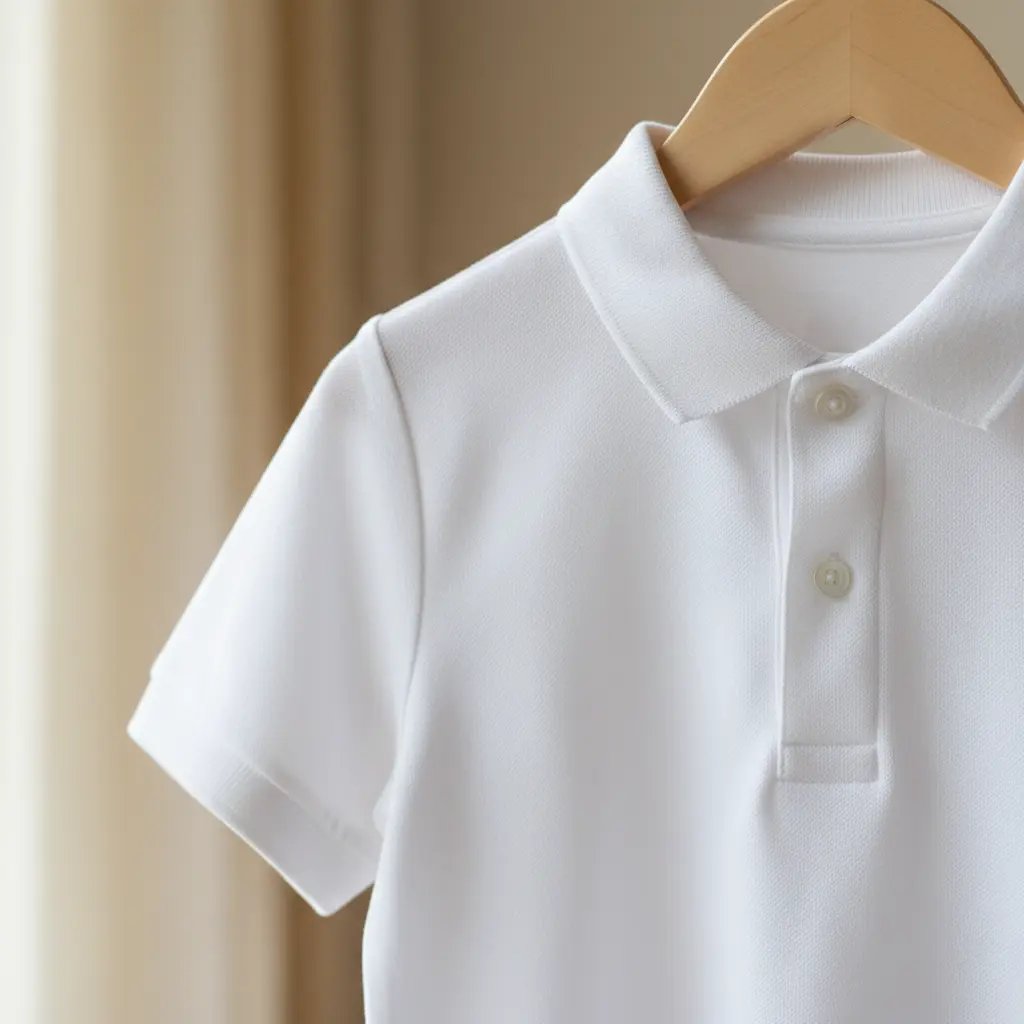
Your family does about 260 loads of laundry every year.
Over 18 years, that's nearly 5,000 washes for the clothes your child wears most.
School uniforms.
Sports kits.
Pajamas.
Each wash leaves something behind.
It's not dirt. It's something else.
A team of researchers at the University of Alberta discovered what that "something" is — and why it matters more than anyone realised.
Especially if your family wears a lot of polyester…
Which, statistically, they do.
Here's what the researchers found.
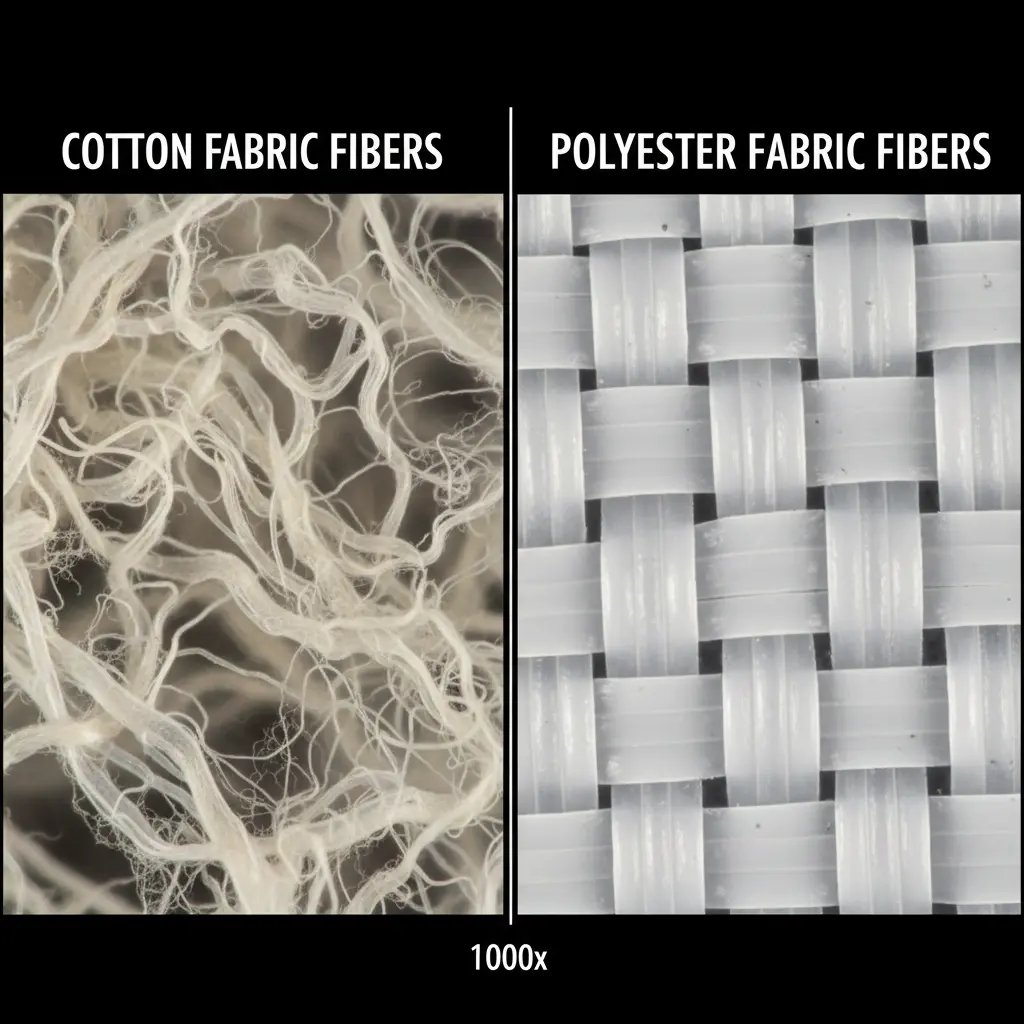
Cotton fibers (left) vs polyester fibers (right) — the tighter synthetic structure traps oil-based compounds
Why Your Gym Shirt Still Smells After 50 Washes: The University Study That Revealed Polyester's Hidden Property
Here's what the researchers were studying:
They wanted to know why certain fabrics develop permanent odours that washing can't remove.
You know what I'm talking about.
That gym shirt that always smells a bit off…
Your son's football kit that has a funk you can't quite eliminate…
Your daughter's school uniform that never quite smells neutral.
So they tested different fabrics after repeated washing.
Cotton. Wool. Polyester. Nylon.
They tracked which fabrics held onto body oils and which ones released them during washing.
The results were stark.
Polyester held onto compounds that cotton released easily.
In fact, the study found that polyester's chemical structure makes it attract and trap oil-based compounds.
The researchers called it "oleophilic" behaviour — which just means the fabric loves oils and grabs onto them.
Body oils. Sweat compounds…
But also anything oil-based in your detergent.
Fragrances formulated to cling to fabrics for days.
Optical brighteners designed to coat fibers permanently.
Preservatives and surfactants that don't fully rinse away.
The study was about odour — but the mechanism they discovered explains something much bigger.
Why Polyester Is Now In Everything Your Family Wears (And Why That Matters More Than You Think)
Polyester isn't some niche fabric you can choose to avoid anymore.
It's literally EVERYWHERE.
According to textile industry data, polyester now makes up 59% of all global fiber production.
It's in roughly half of all clothing made today.
Your workout clothes? Polyester.
Your daughter's school uniform? Polyester or poly-cotton blend.
8 million
UK children dressed in polyester school uniforms 200 days a year
And your kids' pajamas? Polyester.
Even your bedding — microfiber sheets, duvet covers, pillowcases…
All polyester.
It's not a choice anymore.
It's the default fabric of modern life.
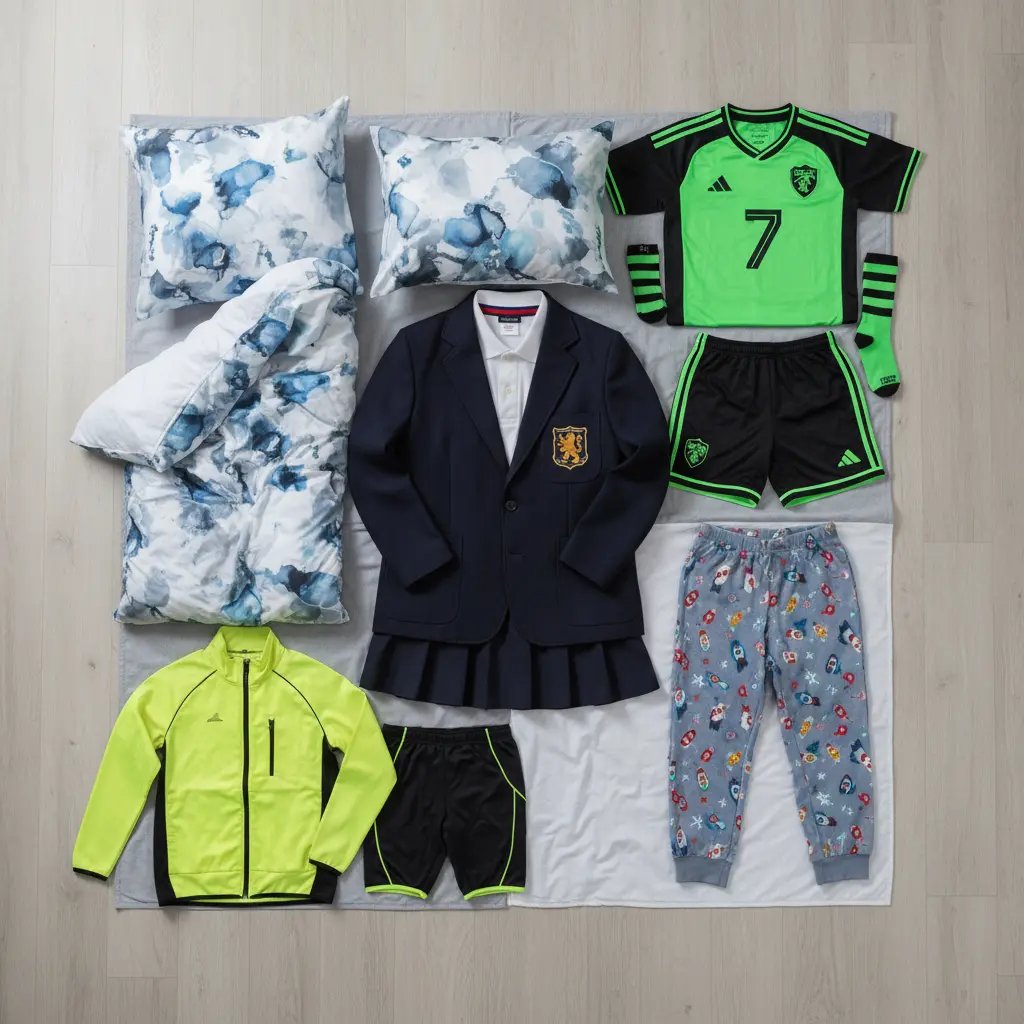
School uniforms, sports kits, pyjamas, bedding — polyester is the default fabric of modern life
And here's what no one's really thought about:
If polyester traps oil-based compounds more than natural fibers do…
And modern detergents leave oil-based residues like fragrances and optical brighteners...
Then what are we actually wearing against our skin all day?
The Laundry Math Nobody's Done Until Now: When 260 Annual Washes Become 4,680 Chemical Exposures
The average UK household does 260 to 284 loads of laundry every year.
That's based on government and market research data. It lines up with about 5 to 6 loads per week, which feels about right for a family of four.
Now let's just focus on one child's wardrobe over their first 18 years at home.
School uniforms get washed twice a week during term time.
Sports kits after every practice or game.
Pajamas weekly.
Bedding every fortnight.
If we're conservative and say just their core polyester items get washed once a week on average, that's 52 washes a year per item category.
Over 18 years, that's 936 washes for their school uniform alone.
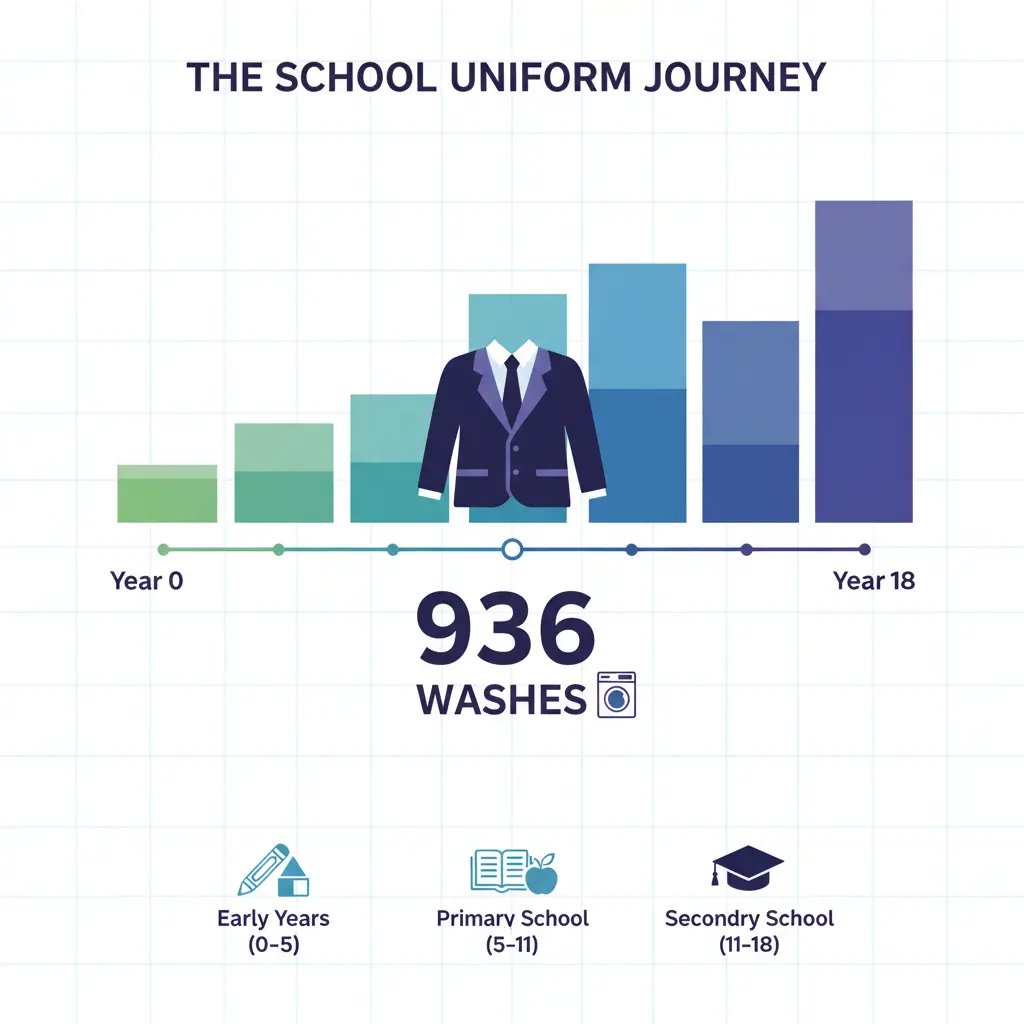
52 washes per year × 18 years = 936 washes of accumulated residue on one child's school uniform
Throw in sports kits, pajamas, bedding…
And you're looking at somewhere between 4,000 to 5,000 wash cycles for the polyester items that live against their skin.
Each wash deposits trace amounts of detergent residue.
We're talking microscopic amounts here — from trace residues after each wash.
But even if it's truly tiny per wash, over 5,000 washes across your child's entire childhood, those trace amounts accumulate.
The exact total?
We don't know — as nobody's measured it.
But here's what matters:
It's pressed against their skin for 24 hours a day, every day, for 18 years.
That's not one exposure.
That's thousands of daily exposures adding up over decades.
And because polyester holds these compounds more than cotton does, the residue doesn't wash away easily.
It builds up wash after wash.
This is the invisible accumulation nobody talks about.
"But I Already Switched To Sensitive Detergent Years Ago" — Why That Doesn't Solve The Problem
Now, you might be thinking:
"I switched to sensitive detergent years ago when my daughter had that skin reaction."
Here's what most people don't know:
"Sensitive" usually just means fragrance-free and dye-free.
That's it.
 They still contain optical brighteners that coat fibers permanently.
- They still have surfactants and preservatives that linger in fabric.
- They still leave microscopic residues that build up over time.
It's like switching from full-sugar Coke to Coke Zero. You removed one ingredient, but the rest of the formula is still there.
The label says "gentle" and "hypoallergenic," so you assume it rinses clean.
It doesn't.
Check the ingredients and you'll still find optical brighteners designed to stay on fabric, surfactants formulated for "long-lasting freshness," and preservatives that remain in fibers.
The difference between "sensitive" and "residue-free" is the difference between "less fragrance" and "nothing left behind."
One reduces irritation for some people. The other eliminates the cumulative exposure cycle entirely.
Families who've already tried sensitive detergents still see benefits when they switch to truly residue-free options.
Because they're finally addressing the root issue:
The chemicals designed to stay in fabric, wash after wash, for years.
The Scientific Gap That Should Concern Every Parent: Your Family Is The Long-Term Study
Now here's the part that should make you pause.
I went looking for studies on what happens when people wear polyester clothing with detergent residues for years and years.
You know how many I found?
Zero
long-term studies on cumulative detergent residue exposure through polyester clothing
There are plenty of studies on whether detergent ingredients are safe in a single wash.
Regulators test whether each chemical is toxic at the concentrations used. They make sure nothing in your detergent will poison you.
But no one's studied cumulative exposure over time.
No one's asked what happens when someone wears polyester coated in chemicals for 30 years straight.
We have studies on food additives consumed daily for decades. We have studies on air pollution breathed in over years. We have studies on sunscreen ingredients absorbed through skin repeatedly. But laundry residue on polyester worn constantly? That data doesn't exist.
And yet, we've been living in majority-polyester wardrobes for about 40 years.
Polyester surpassed natural fibers in global market share in the 1980s.
Which means the first generation to grow up wearing mostly synthetic fabrics, washed with modern chemical detergents, is just now reaching middle age.
We are the long-term study.
Your kids are the even longer-term study.
And we won't know the results for another few decades.
The Historical Pattern: When "Probably Safe" Took Decades To Become "Definitely Harmful"
This is where I'd normally get accused of fear-mongering.
"You're being paranoid. If it wasn't safe, they wouldn't sell it."
So let me just lay out some history.
Asbestos was used in homes, schools, and products for 80 years before we had enough long-term data to prove it caused cancer. It was deemed safe by regulators. It was in the ceiling, insulation, floor tiles. Everyone was exposed to tiny amounts constantly. But tiny amounts over decades ended up destroying lives.
BPA was in baby bottles for 50 years. Regulators said it was safe at the levels people were exposed to. Then studies started showing it has hormonal effects. Now it's banned in baby products in most developed countries.
Lead paint was standard in homes for 70 years. Until studies showed it was damaging children's brains.
In every case, the pattern was the same:
1. New material becomes widely used.
2. Industry studies show it's safe in single doses — regulators approve it.
3. Decades pass — independent long-term studies finally accumulate.
4. Turns out small amounts DO matter when exposure is constant.
5. Regulations change, but only after a generation has been exposed.
I'm not saying detergent residue is the next asbestos…
I'm saying we don't know yet.
And pretending we do know is worse than admitting the gap.
Scientists call this the "precautionary principle."
When you have a probable mechanism of exposure, a lack of long-term safety data, and a simple way to reduce the risk…
Minimising exposure is just common sense.
You don't wait for harm to be proven.
You reduce unnecessary risk while you still can.
How Polyester Turns Every Wash Into A Chemical Deposit (The Velcro Effect)
Polyester on its own is just plastic fibers. Not ideal, but manageable.
It's polyester's properties that make it an amplifier for everything else.
Remember that University of Alberta study? They found polyester grabs onto oils and won't let go.
That same property that traps body odour also traps the chemicals in your detergent.

Fragrances
Formulated to stick to fabric so clothes smell "fresh" for days. Oil-based, so they cling to polyester especially well. They contain many known allergens — and phthalates, used to make scents last longer, are suspected hormone disruptors.
Optical Brighteners
Fluorescent dyes that coat fibers to make whites look "whiter." They're meant to stay on fabric permanently — causing skin reactions in sensitive individuals.
Surfactants & Preservatives
Can remain in fibers after rinsing. They contribute to the chemical layer that builds up over time.
Each of these is present in tiny amounts per wash.
But polyester holds onto them better than cotton does.
And you wash these items hundreds of times over the years.
So polyester acts like chemical velcro.
It grabs onto fragrance molecules, brightener dyes, and preservatives.
They accumulate wash after wash — and sit against your skin all day.
Your daughter's school polo isn't just polyester anymore. It's polyester plus 936 washes worth of accumulated chemical residue. That's the amplifier effect.
Some families may notice skin reactions — but the bigger concern is what you CAN'T see.
Chemical residues accumulating over thousands of washes with zero long-term studies on what that means.
Why Heat, Sweat, And 24-Hour Contact Time Turn Clothing Into Maximum Exposure Conditions
Your skin absorbs more than you think.
Dermatologists know that certain conditions increase how much your skin absorbs:

Heat makes skin let more through.
Studies show that raising skin temperature from 25°C to 39°C can increase chemical absorption by 3 to 6 times.

Moisture and sweat help chemicals cross into skin.
A University of Birmingham study proved that sweaty skin absorbed up to 8% more chemicals than dry skin.

Time is the biggest factor.
The longer a chemical stays in contact with skin, the more your body absorbs.
Now think about clothing.

Heat, sweat, and hours of contact — perfect conditions for maximum chemical absorption
You wear polyester clothes up to 24 hours a day.
When you exercise in polyester athletic gear, you get hot and sweaty.
Perfect conditions for maximum absorption of whatever's on that fabric.
When your child runs around at breaktime in their polyester uniform — same thing.
Even at night, body heat and sweat turn polyester pajamas into chemical delivery systems while your kids sleep.
Compare that to shampoo, which touches your skin for 30 seconds and rinses off.
Or hand soap, which gets 15 seconds of contact (if that).
Even body lotion absorbs within minutes and then it's done.
But clothing and bedding? That's 24/7 contact time for years.
The Simple Solution: Control What Polyester Carries, Not What Your Family Wears
Here's the good news.
You don't have to throw out your wardrobe and hunt down 100% cotton alternatives for everything.
You don't have to feel guilty about the polyester bedding or your kids' school uniforms.
Because the problem isn't polyester itself.
The problem is what we're coating polyester with every time we wash it.
And that's something you can control with one simple switch.
There's a new category of laundry products designed to clean without leaving anything behind.
 No heavy fragrances formulated to cling to fabric for days.
- No optical brighteners coating fibers to create that artificial glow.
- No unnecessary dyes or preservatives.
- Just plant-based & lower-impact ingredients that actually rinse away completely.
When you wash clothes with residue-free detergent, you're left with just the fabric.
No chemical film. No fluorescent dye layer. No buildup wash after wash.
And your polyester items? Clean fabric. Nothing else.
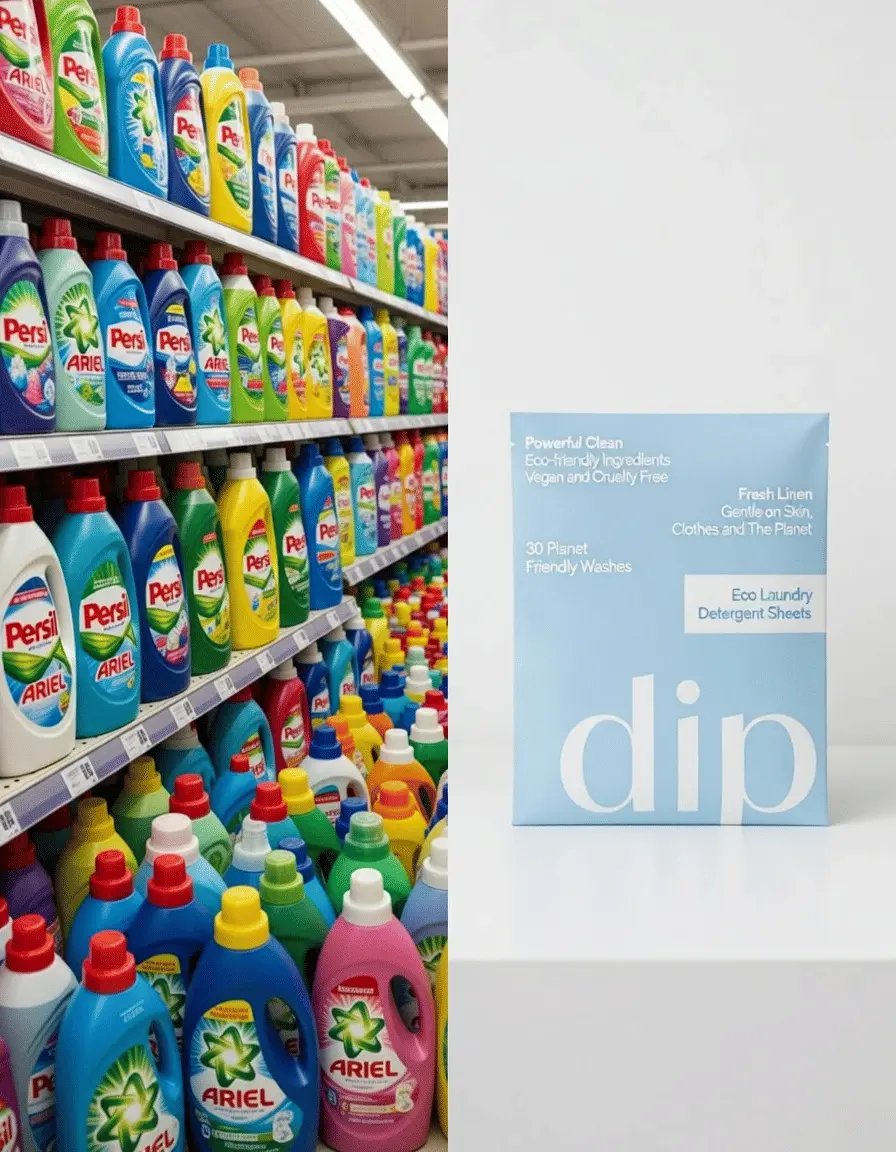
Left: The overwhelming chemical aisle. Right: One simple switch that actually rinses clean.
Why Dip Laundry Sheets Actually Solve The Residue Problem (Not Just Claim To)
"After years of traditional detergents and other eco-products, Dip is the first that's easy to use, cleans well and feels genuinely better for both my clothes and the planet."
Over 60,000 UK families have switched to Dip — a non-toxic home care brand that finally addresses what conventional detergents leave behind. Here's what makes it different.
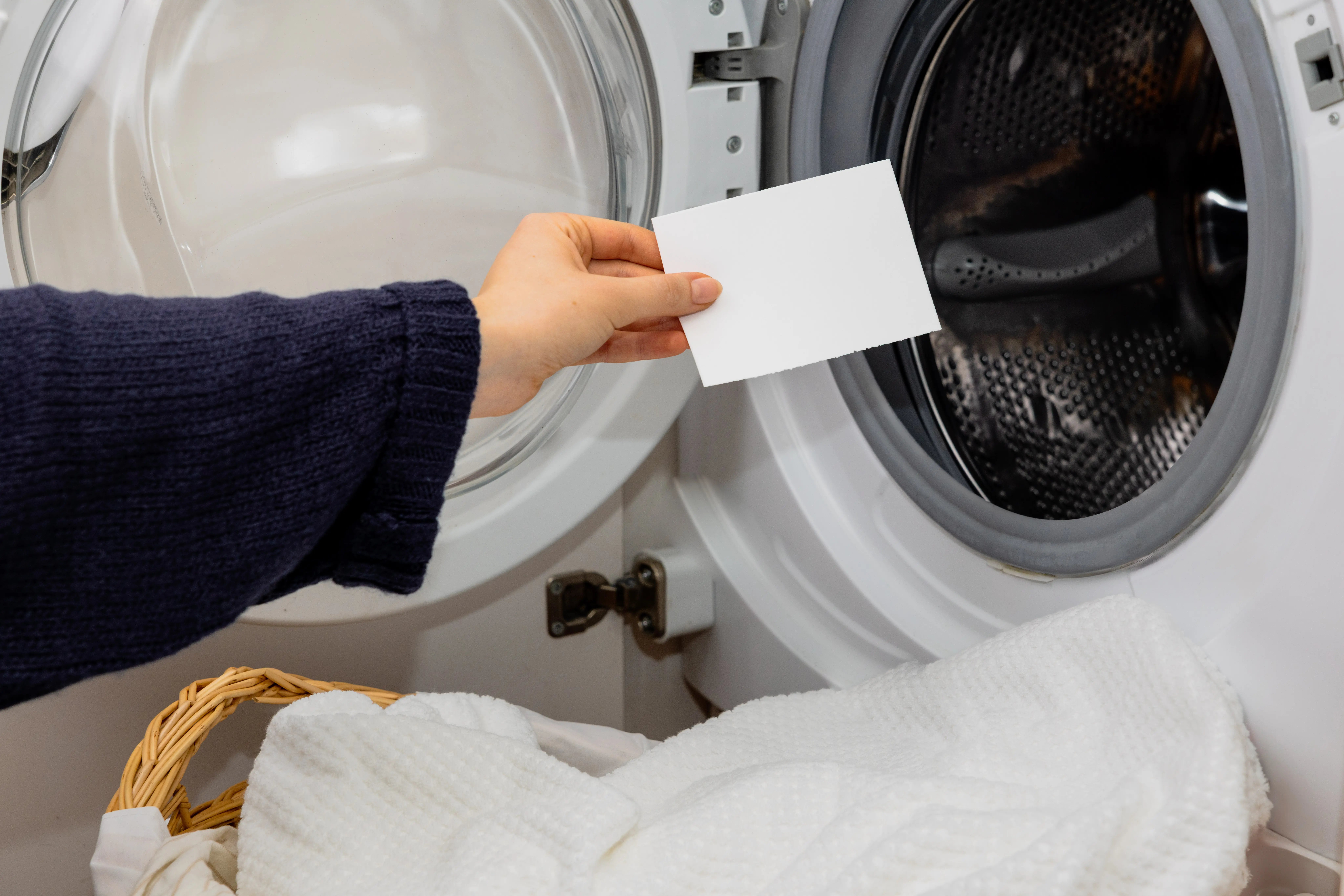
Drop one sheet into the drum — it breaks down entirely during the wash, leaving nothing behind
Each sheet is over 80% active plant-based cleaning ingredients.
You drop one into the drum and it breaks down entirely during the wash — leaving nothing behind.
No gummy residue coating fibres, no chemical film building up over hundreds of washes — just clean fabric.
Liquid detergents can't do this because they're mostly water.
To keep all that water shelf-stable for months, manufacturers have to add fillers and preservatives.
Those additives are specifically designed to stick around — which is exactly what creates the residue problem you've been living with.
Sheets have no water, which means they need none of those additives.
It's pure concentrated cleaning power that does its job during the wash and then rinses away completely.
Nothing gets left behind to accumulate over the 936 washes your daughter's school uniform will go through before she outgrows it.
 What Makes Dip Different
 Over 80% active plant-based cleaning ingredients
- Choose phthalate-free fragrance or completely fragrance-free
- No optical brighteners or dyes coating fibres
- Dermatologically tested, hypoallergenic, OECD certified
- Same 30 seconds — just drop a sheet instead of pouring liquid
The difference you'll notice?
Your daughter's school uniform comes out of the wash clean.
Not clean plus a fragrance layer sitting on the fabric for days.
Not clean plus optical brighteners coating every fibre.
Not clean plus residue that never fully rinses away.
Just clean.
Here's what that actually means in practice:
Your daughter comes home from school and tosses her uniform in the wash. Next morning, she puts it on and it smells like... nothing. Not lavender fragrance clinging to the fibres for days. Not that "long-lasting freshness" coating every thread. Just clean fabric that dried in your home.
When your son wears his football kit for the third practice this week, it doesn't develop that permanent smell that washing can't shift. His polyester training top is just a training top again — not a bacteria-trapping chemical sponge.
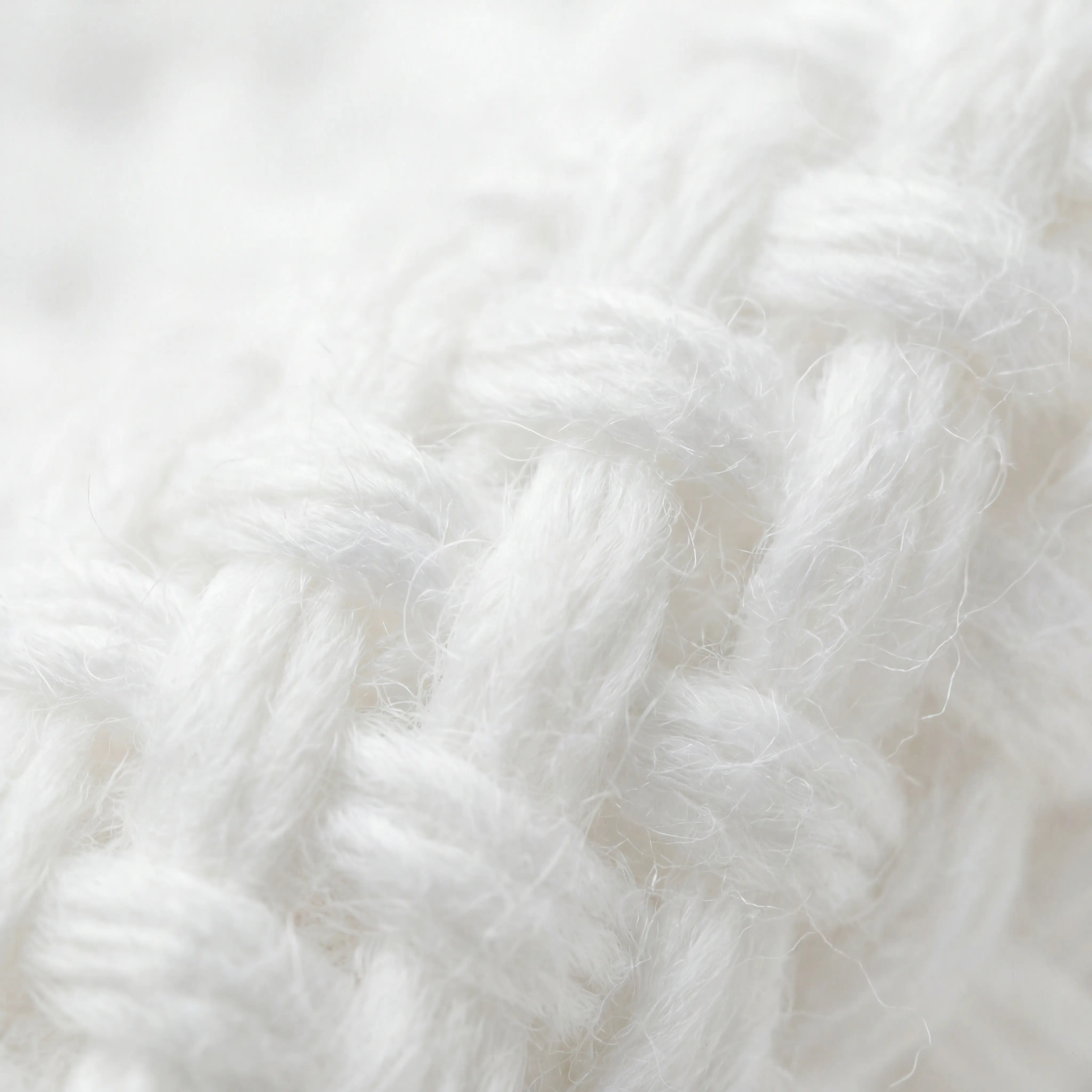
No invisible film. No chemical coating. Just genuinely clean fabric.
That's what you're paying for when you switch — laundry that actually rinses clean instead of building up layers over years.
For the first time in years, your laundry is actually just laundry — not a chemical carrier pressed against your family's skin for 24 hours a day.
That's what those 60,000 families discovered when they made the switch.
Your polyester clothes stay polyester — but stop being chemical carriers.
No invisible buildup accumulating from 936 washes.
No residue pressed against skin every single day.
Just clean fabric doing its job — without amplifying exposure to compounds we have no long-term safety data on.
That's the switch.
At 30p to 40p per wash, you're not paying for fancy marketing or celebrity endorsements.
You're paying to eliminate 4,680 chemical exposures over the next 18 years.
That works out to roughly £100 per year to know your child's school uniform isn't accumulating compounds nobody's studied long-term.
Compare that to the cost of replacing their entire polyester wardrobe with organic cotton alternatives that don't actually exist at scale.
This isn't about being cheap or expensive — it's about what those 936 washes add up to when they're coating fabric instead of rinsing clean.

100% money-back guarantee — no questions asked
Try It For 90 Days And See What Changes (Risk-Free)
You'll definitely notice the difference in your first few washes.
Clothes that actually feel clean instead of coated — that gym kit that finally stops holding onto smells.
But three months gives you time to see if your daughter's occasional skin irritation becomes less frequent, if your son's mystery itchiness finally stays gone, or if your own skin just feels better when you wear clothes washed in Dip.
If you don't feel confident that switching has eliminated a major exposure route for your family, just contact our support.
 90-Day Money-Back Guarantee
Full money-back guarantee, no questions asked. If you're not convinced Dip eliminated a major exposure route for your family, we'll refund every penny.
Here's why the subscription matters for this specific problem:
You're not making a one-time purchase and then drifting back to whatever's on offer at the shop when you run out.
Dip arrives at your door before you need it — which means every single one of those 936 washes over the next 18 years is residue-free.
Not just the ones when you remember to reorder.
No more standing in that supermarket aisle, staring at rows of bottles you now know are designed to cling to fabric.
No more grabbing whatever's in front of you just because it's convenient, now that you know about chemical accumulation.
One decision eliminates 936 washes worth of chemical exposure. No need to choose again every time you run out.
Your subscription is completely flexible. Skip deliveries, change frequency, swap products, or cancel anytime from your account. You're in full control.

"I like the subscription as once you've worked out how many you use in a month it's easy to get the correct number delivered."
— Karen
"I've been using Dip for over a year now and would never go back to 'normal' washing liquids. So simple to use, sustainable, and no more lugging of heavy laundry bottles or boxes."
— Rachel
Why 60,000 UK Families Made This Switch (And Why The Number Keeps Growing)
You're not the first person to connect these dots.
Over 60,000 UK families have already switched to Dip and committed to breaking the cumulative cycle.
Not because they panicked — but because once you see how polyester amplifies every chemical it touches, you can't unsee it.
Here's who's already made the switch:

Pippa Campbell
Functional Hormone Nutritionist
"It's a simple switch which can make a huge difference to your health."

Sophie Bertrand
Registered Nutritionist
"Not only are they better for our health but they are super effective on tough stains..."

Tim Gray
UK's Leading Biohacker
"They're super clean and healthy but they actually work well — much lower toxins than the retail stuff."
When experts whose entire job is understanding how chemicals affect the body choose residue-free detergents, that tells you something.
Professional athletes follow Dip on Instagram because residue-free washing makes performance fabrics work properly.
No clogged wicking channels from optical brightener buildup.
No bacteria trapped in surfactant layers that make kit smell rank after one training session.
Just fabric that does its job without carrying compounds that nobody's studied long-term.
As Featured In
"I love the laundry sheets they are easy to store and use. I find my skin doesn't itch as much as I chose the fragrance free."
— Wyn
"I love the fact these sheets clean my laundry without using nasty toxins - they are easy to store, smell great and clean all the clothes well, especially my husband's work clothes that are often covered in dust, concrete and mud - won't go back to nasty liquid detergents now!"
— Sharon
"I tried dip after having a baby as I was concerned about chemicals in my previous washing powder. It cleans just as well and is easy to use. I love that there is no plastic in the packaging and it's delivered to my door. An easy switch."
— Allison
These families aren't thinking in wash cycles anymore…
They're thinking in decades.
In the 936 washes their daughter's school uniform will go through.
In the 24 hours a day their family is surrounded by polyester — from school uniforms to pyjamas to bedding.
In the years of exposure that nobody's studied yet.
What they all have in common:
They made one decision that eliminated thousands of future exposures.
One subscription. Every wash after that is handled.
That's the switch.
And once you make it, you don't go back — because you can't unsee what polyester's been carrying all this time.
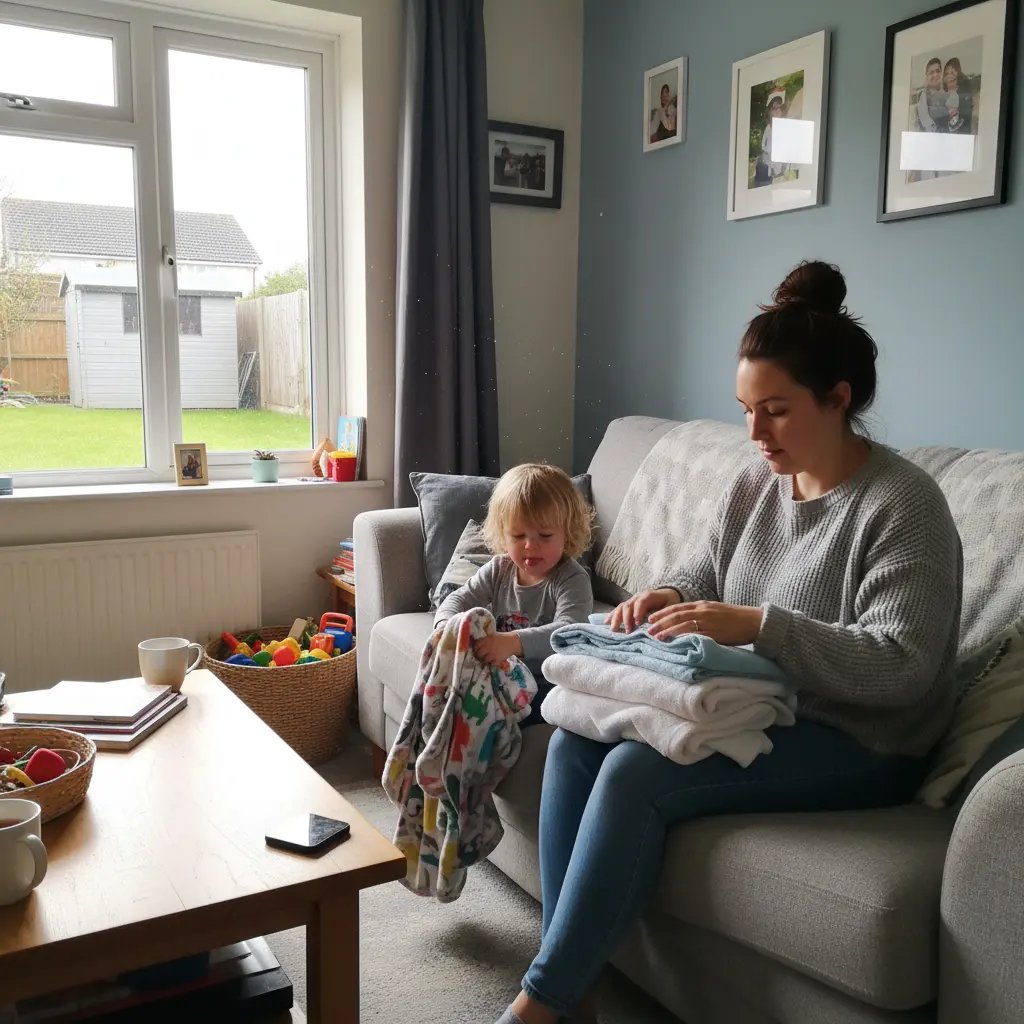
60,000 UK families made one decision that eliminated thousands of future chemical exposures
The Decision Your Future Self Will Thank You For
Here's what you know now that you didn't 10 minutes ago:
Polyester traps detergent residues 3x more than cotton.
Your family wears polyester constantly.
Those residues sit against their skin 24 hours a day, accumulating over 936 washes, for years.
We have no long-term data on what that means.
You can't eliminate polyester.
It's woven into the fabric infrastructure of modern life — school uniforms, sports kits, pyjamas, bedding.
But you can eliminate what polyester carries.
One subscription means every one of those 936 washes becomes residue-free — instead of adding another microscopic layer of compounds nobody's studied long-term.
Try Dip risk-free for 90 days.
If you don't feel confident that this eliminated a major exposure route for your family, contact support for a full refund. No questions asked.
The long-term study is happening right now — on your family's skin.
Every day you wait is another day of exposure. Every wash you delay switching is another microscopic layer accumulating on their school uniform. Another deposit in the chemical bank account that compounds over decades.
You can't get those exposures back — but you can stop adding to them today.
The only question is what they're exposed to from this point forward.
Start Your Risk-Free Trial —
Eliminate 4,680 Exposures Over 18 Years
Join 60,000+ UK families who've eliminated chemical residue from their laundry. Your family's skin will thank you.
Try Dip Risk-Free For 90 Days
 Free UK Delivery90-Day Money-Back
 Plastic-Free