
 10 min read

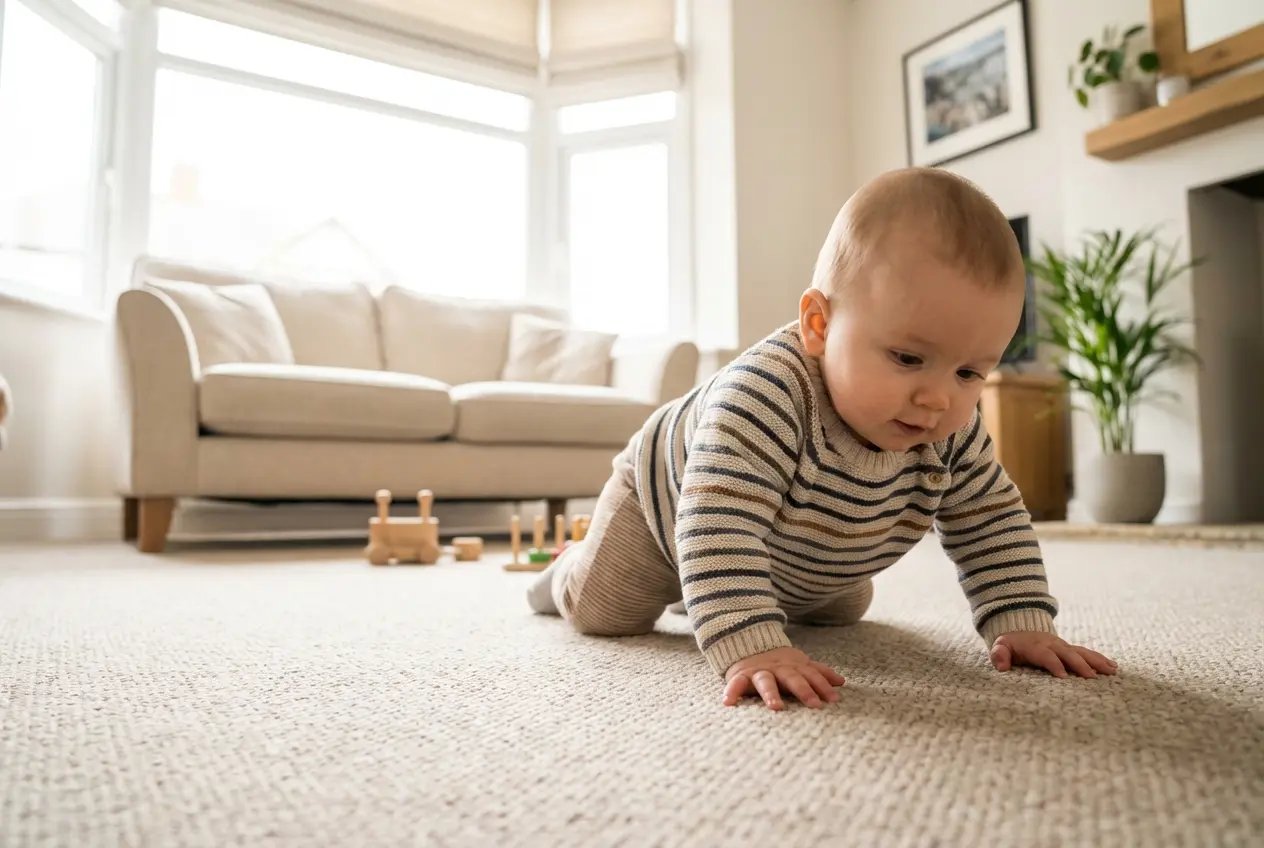
If you have a baby who crawls…
A toddler who climbs on furniture,
or a pet who walks across your floors…
Stop cleaning for a second and read this.
It will completely change how you see every surface in your home.
Because scientists have discovered something deeply disturbing about the way most UK families clean.
And it has nothing to do with germs.
It's about what happens AFTER you clean.
When surfaces look spotless and the room smells "fresh".
That's when the real problem begins.
In the next few minutes, you'll discover:
• Why over 60,000 British families have abandoned their old cleaning products entirely.
• Why pediatricians are warning parents about a "chemical reservoir effect" in their homes.
• Why the surfaces you clean the most carefully might be the exact ones slowly poisoning your children and pets.
But here's what matters most: you'll learn about the one-sheet solution that eliminates chemical reservoirs at the source - without compromising on cleaning power.
Let me show you what's really happening in your home right now.
See The Solution 60,000 UK Families Are Using →
The Surface Problem Nobody's Talking About
Picture the last time you cleaned your kitchen.
You grabbed the spray bottle, gave the counter a few pumps, and wiped it down with a cloth.
It looked clean, it smelled clean…
Job done, right?
Here's what you didn't see:
When you sprayed that counter, the chemicals didn't just sit on top for a few minutes before evaporating into thin air.
Research published in 2024 by the American Chemical Society analysed "recently cleaned" surfaces in typical homes across Europe.
What they found was shocking.
Cleaning spray residues remain on surfaces for weeks, months, sometimes over a year after you've finished cleaning.
"Even after what appears to be thorough wiping, we detected a diverse array of cleaning compounds in thin films on every surface tested."
— Lead Researcher, American Chemical Society Study
But here's where it gets worse.
That's just on hard surfaces like glass, tile, and sealed countertops.
The real danger is what's happening with the OTHER surfaces in your home.
 Your sofa
- Your carpet
- The fabric high chair where your baby sits three times a day
- The pet bed your dog lies on before licking his paws clean
Scientists call these "porous surfaces."
And researchers at multiple European universities have discovered something about them that should concern every parent.
The Absorption Effect: How Your Furniture Becomes A Chemical Reservoir
Think about the last time you "freshened up" your sofa with a spray, treated a carpet stain or wiped down the fabric on your high chair.
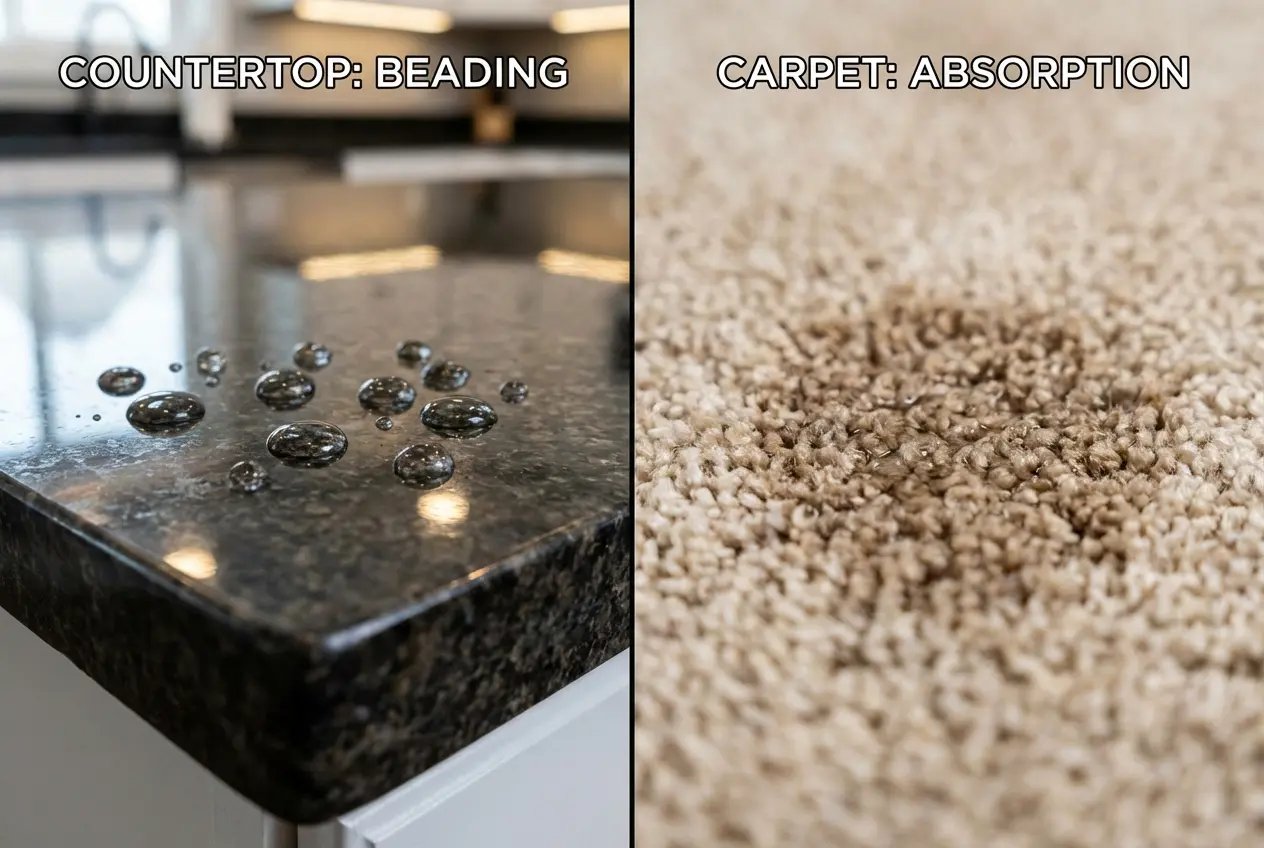
When you spray a cleaner on glass or tile, the chemicals sit ON TOP of the surface - like water droplets on a polished car.
Some of it evaporates. Some get wiped away.
But when you spray fabric, carpet, or upholstery?
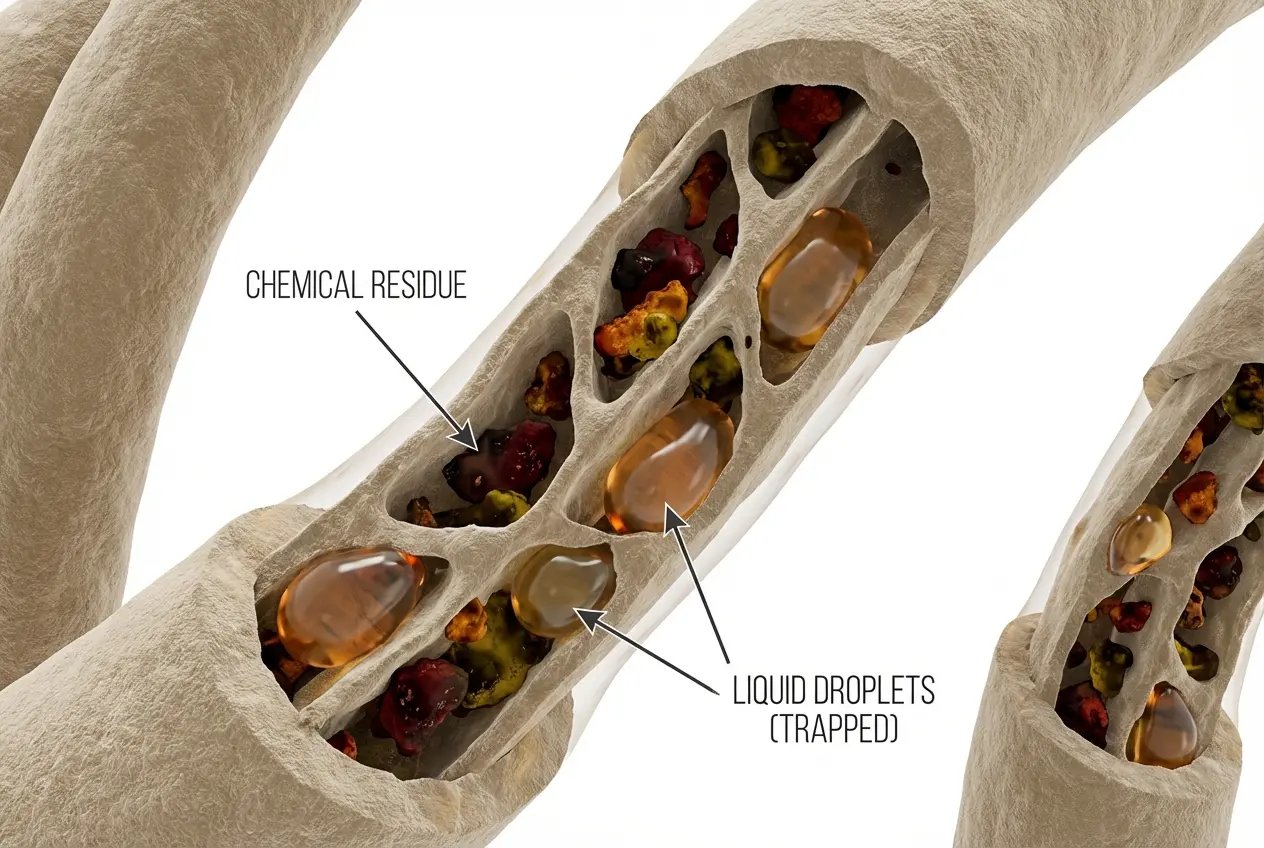
The chemicals don't sit on top. They absorb deep into the fibers.
A comprehensive study published in Environmental Science & Technology examined how porous household materials interact with cleaning products.
The findings were clear:
Porous materials act as "chemical reservoirs" - they absorb cleaning compounds deep into their fibers and continuously leak those chemicals back into your home for weeks or months.
"Carpets and upholstered furniture don't just hold dirt and dust. They uptake chemical pollutants from cleaning products and then re-emit those chemicals into the home environment for weeks or months after application."
— Environmental Science & Technology Study Authors
Stop and think about what that means for a second.
Every sofa cushion your toddler faceplants into during playtime...
Every bit of carpet your baby crawls across...
Every fabric toy you wipe down with "antibacterial spray"...
They're not just clean.
They're saturated with chemicals that stay active long after the surface dries.
And children are touching these surfaces constantly, all day long, every single day.
Which brings us to the research that changes everything.
81 Times Per Hour: The Hand-To-Mouth Chemical Pipeline You Can't See
Researchers tracking young children's behavior discovered something that fundamentally changes how we need to think about chemical exposure in homes.
In an EPA-funded observational study, scientists equipped 72 young children with monitoring devices and tracked their hand-to-mouth behavior throughout the day.
The results were staggering:
Not per day. PER HOUR.
Children aged 2-5 years? Still 42 times per hour.
Let that sink in.
Right now, babies across the UK are touching surfaces and then putting those same hands in their mouth more than once every minute.
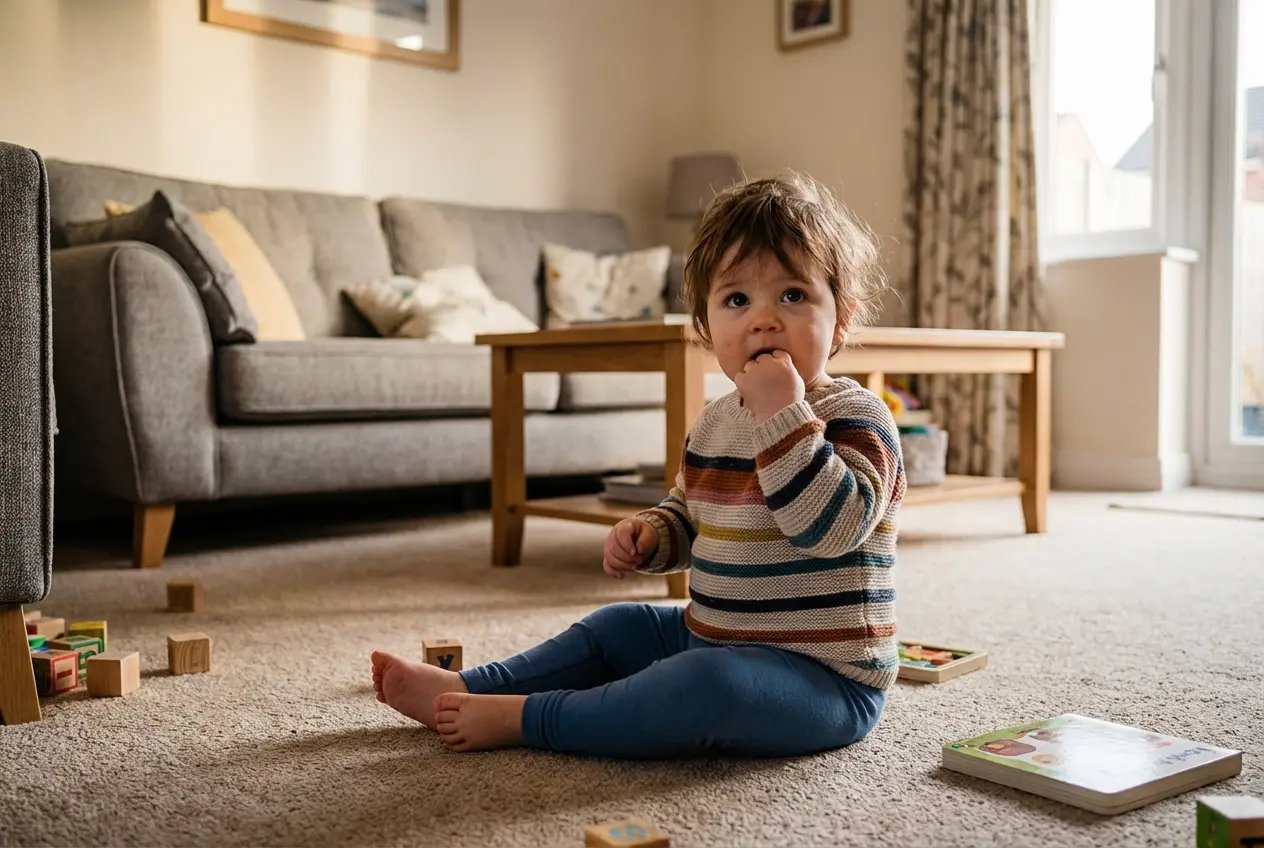
Stop for a second. Look around your living room right now.
That carpet your toddler is sitting on? You treated a stain on it three weeks ago. The chemicals are still there, soaking in the fibers.
That sofa cushion they're leaning against? You sprayed it down last month. The chemicals are still active, designed to persist for 9 months.
That fabric high chair where they eat breakfast, lunch, and dinner? You wiped it with antibacterial spray yesterday. It's saturated.
Your child just touched that carpet. Now their hand is going toward their mouth. Again. For the 81st time this hour.
The surfaces you cleaned most carefully - the ones you thought you were protecting them with - are the exact ones transferring chemicals into their body, contact after contact, hour after hour, day after day.
That's the chemical reservoir effect. And it's happening in your home right now.
Learn How To Stop Chemical Accumulation →
Each time those tiny hands touch a treated surface, 0.2% to 2% of the chemical residue transfers onto their skin.
Sounds small - until you realise they're touching 50 to 100 different surfaces every hour.
A 2024 study found that touching surfaces accounts for over half of all indoor chemical exposure in young children.
And if you have pets, the problem multiplies exponentially.
The Pet Grooming Loop: Why Your Cat Or Dog Is Even More Vulnerable
When a dog walks across a floor mopped with disinfectant, chemical residues coat their paws with every step.
Two hours later, they're lying on the sofa, methodically licking their paws clean.
They're not "cleaning" themselves.
They're directly ingesting whatever you cleaned with.
Cats are even more vulnerable.
According to veterinary research, cats spend between 30% and 50% of their entire waking day grooming themselves.
They're constantly licking their fur, their paws, every surface of their body that might have contacted your "clean" floors or furniture.
A 2015 study by the UK's Veterinary Poisons Information Service tracked 245 cats exposed to benzalkonium chloride - a type of QAC (quaternary ammonium compound) found in most conventional UK cleaning sprays.
The findings were alarming:
• 94% of exposed cats developed symptoms
• Over half experienced excessive, uncontrollable drooling
• Around 40% developed painful mouth ulcers that prevented them from eating
• Many couldn't eat solid food for days
• Three cats died from the poisoning despite receiving veterinary treatment
That's 1 in every 100 exposed cats.
Here's what makes this so disturbing:
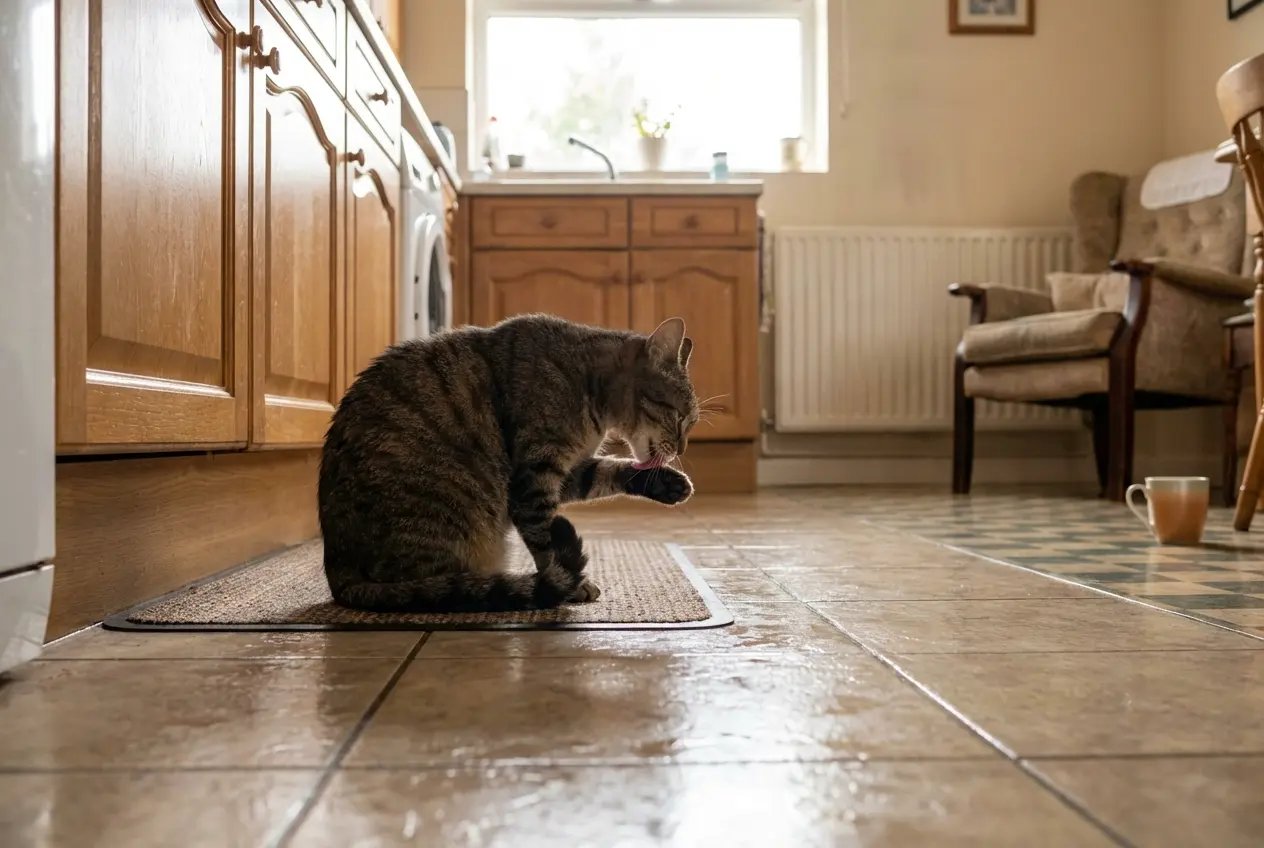
These weren't animals who knocked over a bottle and drank the contents.
The majority of exposures happened from cats simply walking on freshly mopped floors and then grooming themselves hours later.
They just walked on "clean" floors and did what cats naturally do - groom themselves obsessively.
Make "Clean" Floors Safe For Your Pets →
The Science Big Brands Don't Tell You
At this point, you might be thinking:
"Surely these chemicals are tested."
"Surely they're safe in the small amounts we use at home."
"The government wouldn't allow dangerous products on supermarket shelves."
Here's what scientists have actually discovered.
The 9-Month Persistence Problem
Quaternary ammonium compounds (QACs) are the active cleaning ingredients in most UK spray disinfectants.
You'll find them listed on the back of spray bottles as "benzalkonium chloride" or "didecyldimethylammonium chloride" - good luck pronouncing these.
Environmental chemists studying these compounds made a disturbing discovery:
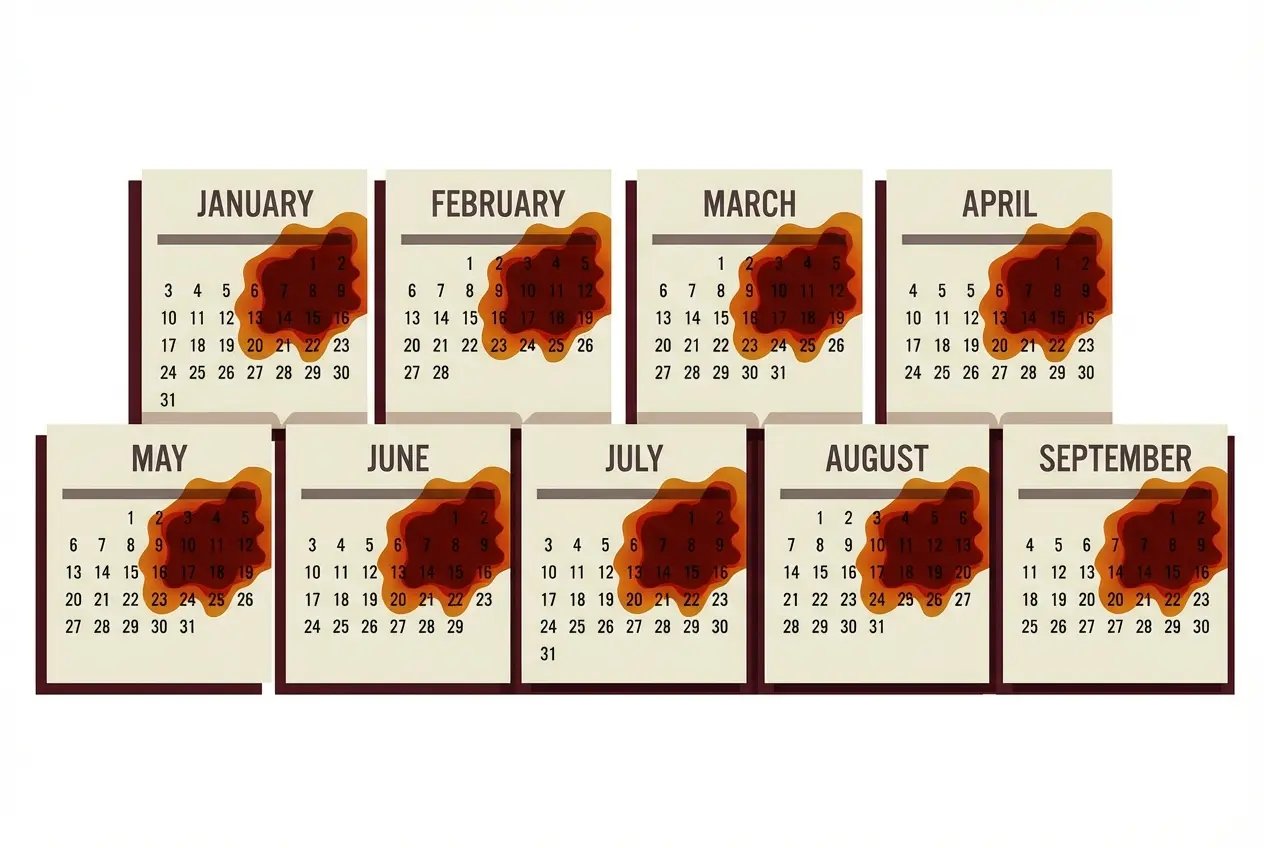
They don't break down naturally or evaporate. They're chemically stable and remain until something physically removes them.
Many products actually advertise this as a feature.
"24-hour antimicrobial protection" means the chemicals are designed to stay active on your surfaces all day and night.
Further research found that fragrance chemicals can remain on surfaces for up to 10,000 hours. That's over a year.
Think about how many times the average sofa, carpet, or high chair gets cleaned in a year.
Those chemicals are layering on top of each other, soaking deeper with each application, never fully leaving.
The Cumulative Load Problem Everyone Ignores
Research examining the total chemical burden in typical family homes reveals just how widespread this problem is.
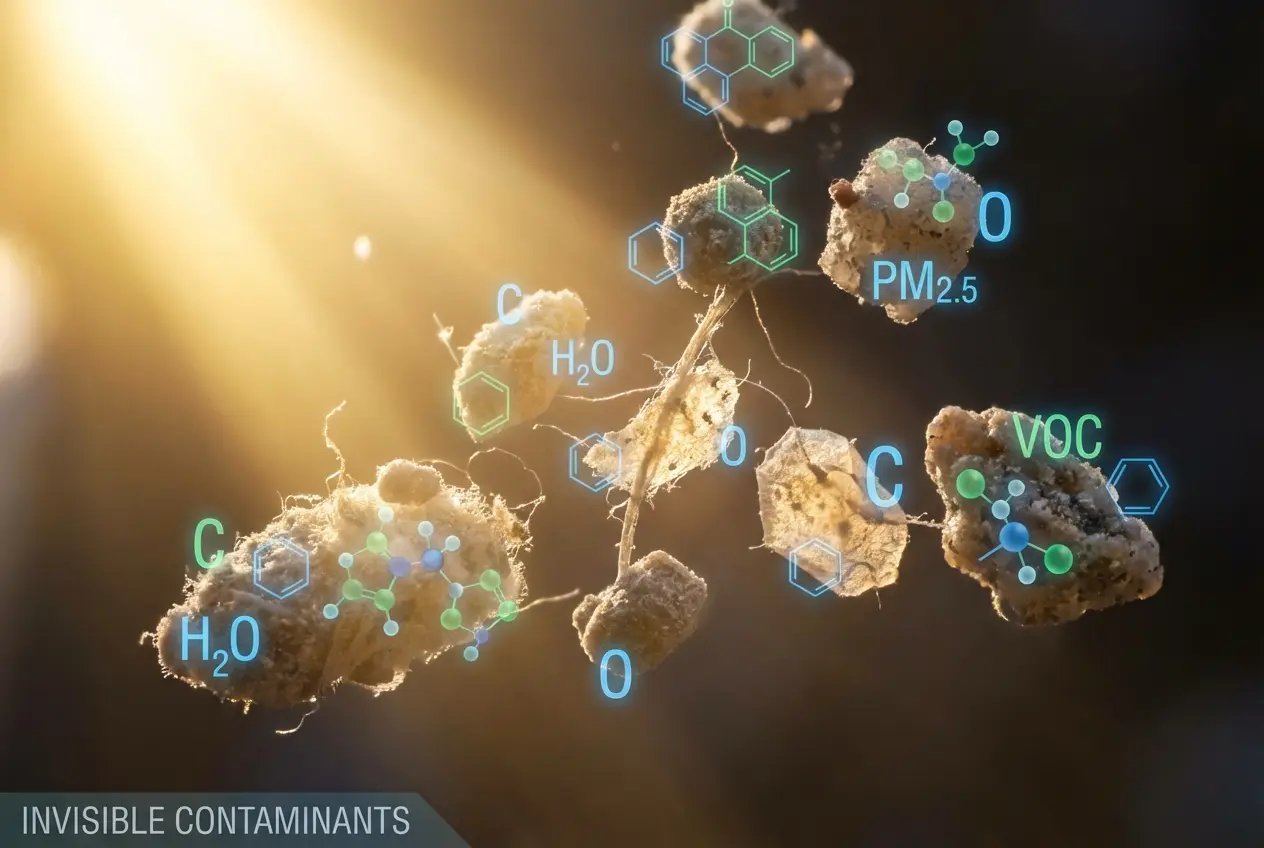
The Silent Spring Institute analysed household dust from homes across the US and UK.
What they found should be front page news:
- 45 different potentially toxic chemicals were present in the average home's dust
- Phthalates - hormone-disrupting chemicals commonly found in fragrances - appeared in 100% of homes tested
- Ten different chemicals were found in 90% of homes at measurable levels
"People are exposed to a broad mixture of chemicals in their homes. The evidence suggests that exposure to even small amounts of these chemicals in combination can lead to an amplified health risk, especially for developing infants and children."
— Silent Spring Institute Researchers
"We're learning that the indoor environment can be a significant source of chemical exposure, particularly for young children who spend most of their time at home and have unique hand-to-mouth behaviours."
— Dr. Robin Dodson, Environmental Exposure Scientist
Here's the part most "green" cleaning companies don't want you to understand:
It's not just about one chemical from one product.
It's the aggregate exposure across every treated surface in your home, accumulating week after week, month after month, year after year.
Each application adds another layer. Each layer persists for months in porous surfaces.
Each surface becomes another source of exposure every time a child touches it and puts their hands in their mouth.
81 times. Every single hour.
The math is brutal.
Stop The Accumulation Now →
The Uncomfortable Truth About "Protecting" Your Family
Here's the uncomfortable reality:
Most parents clean obsessively because they care deeply about their children's health.
They want to eliminate germs. Prevent illness. Create a safe, hygienic environment.
It's an act of love.
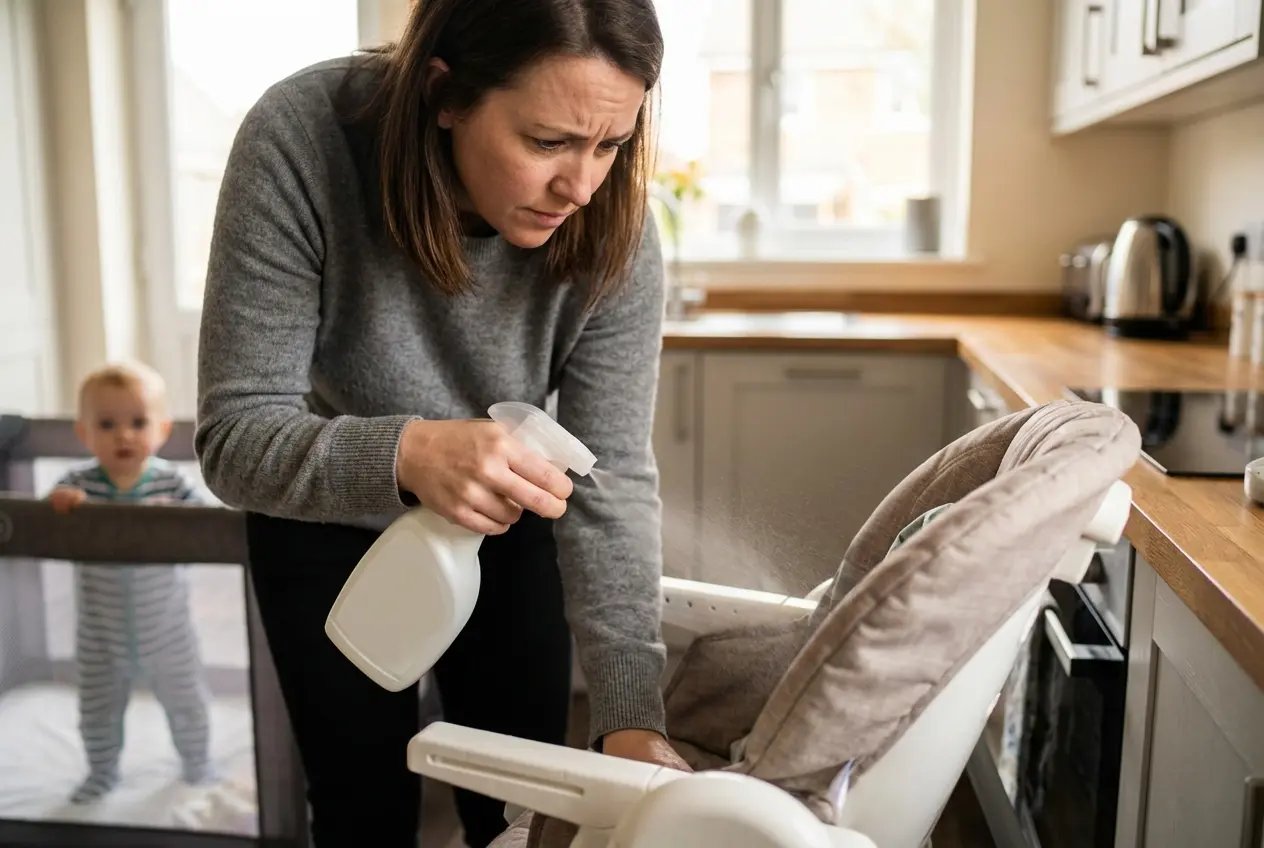
But what if the products marketed as helping you protect your family have actually been doing the opposite?
What if every time you sprayed that high chair…
Wiped down that toy…
Treated that carpet stain...
You were coating those surfaces with chemicals linked to asthma, hormone disruption, and developmental delays?
The intention was protection.
The outcome was exposure.
And the cruelest part?
There was no way to know.
The products are on every supermarket shelf. The advertisements show happy families in clean homes. The labels say "kills 99.9% of bacteria" and you trust that means your family is safer.
Nobody mentioned the 9-month chemical persistence.
Nobody explained the porous surface absorption.
Nobody told you about the 81 hand-to-mouth contacts per hour.
You were doing exactly what you were told was right.
But the research tells a different story.
Why Switching To "Eco-Friendly" Products Isn't The Answer
Maybe you're thinking:
"Okay, conventional cleaners are problematic. I'll just switch to eco-friendly products. Problem solved."
Not necessarily.
Some "eco-friendly" products still contain QACs. They're just derived from plant sources and marketed as "natural".
But a QAC is a QAC, regardless of its source.
Same 9-month persistence. Same surface absorption. Same exposure pathway.
Plant-derived doesn't automatically mean safer when you're using the same chemical compounds.
The Format Revolution: Why Dissolvable Sheets Change Everything
For years, families faced an impossible choice:
Effective cleaning with toxic chemicals, or "eco-friendly" products that barely worked.
 Conventional sprays are loaded with QACs and phthalates that persist for months
- "Eco" alternatives often contain the same problematic ingredients but just marketed differently
- And concentrates? Same chemicals, smaller bottles
Then a new format emerged: ultra-concentrated dissolvable cleaning sheets.
How It Works (And Why It Matters)
The concept is elegantly simple:
Instead of buying a bottle filled with 95% water and 5% chemicals (most of which are preservatives, not cleaning agents), you get an ultra-concentrated sheet.
Each sheet is over 80% active plant-based and lower-impact ingredients.
You drop one sheet into a reusable glass bottle, fill it with water, shake for 30 seconds and it dissolves completely.
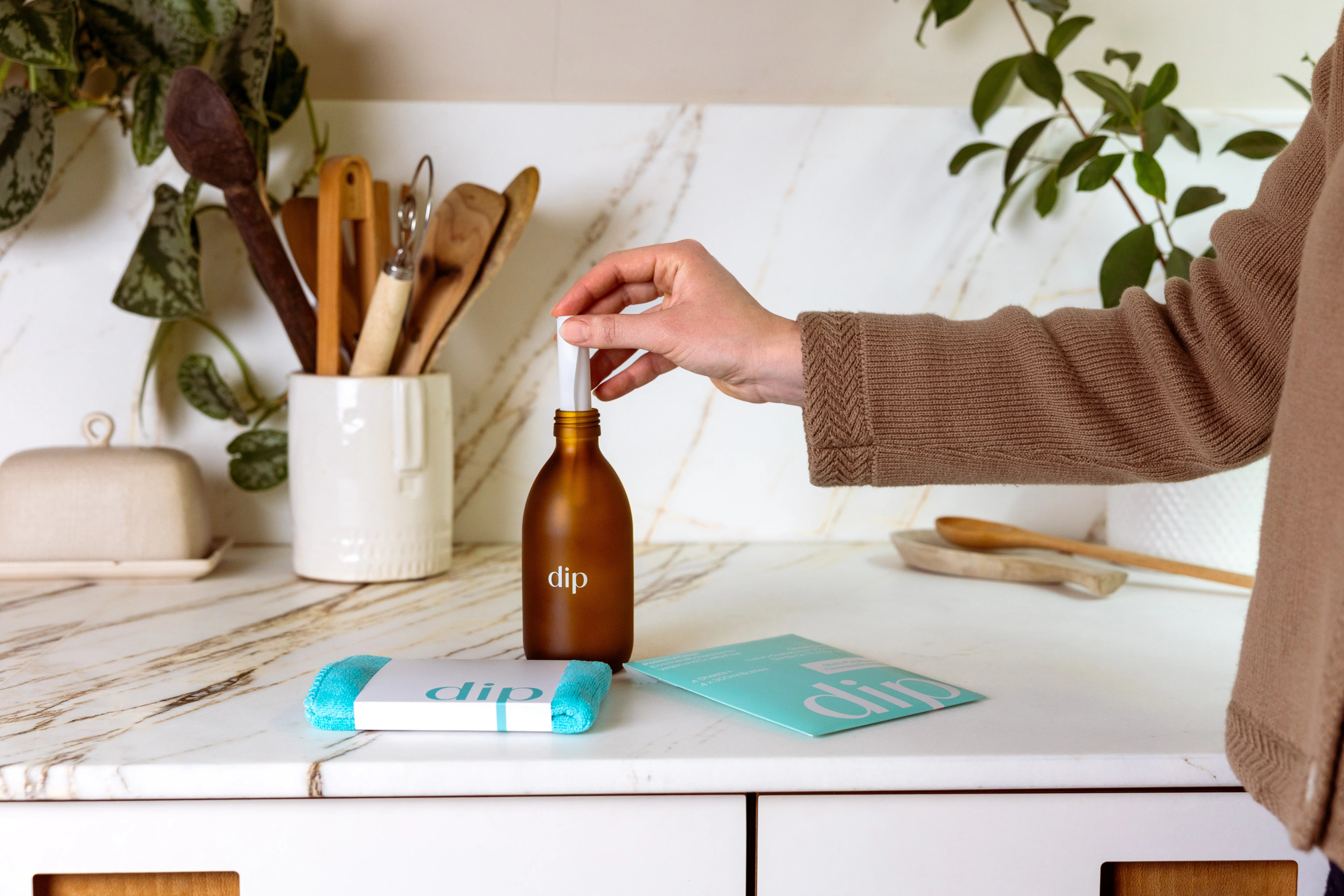
The liquid is clear. No artificial dye. No harsh chemical smell burning your nostrils as you spray.
When you wipe a surface, there's no slippery residue left behind. No need to wipe twice to remove the film. The surface is just... clean.
No holding your breath while you spray. No opening windows to "air out" the chemical smell. No irritated throat after cleaning the bathroom.
Just surfaces that look clean, feel clean, and are actually safe to touch.
One sheet works on every surface in a home: glass, wood, stone, metal, fabric, upholstery, carpet.
No need for five different "specialty" cleaners - which is just marketing to sell you five times the product. A window doesn't need different chemicals than a worktop.
Here's The Critical Difference - And Why It Matters For Your Family
Remember how QACs persist for 9 months in porous surfaces? How they're designed to stick around and remain active?
Plant-based and lower-impact surfactants work differently.
When they contact fabric or carpet, they don't bind to fibers the way synthetic QACs do. They break down more naturally over time.
Why does this matter?
 Sofas stop becoming chemical reservoirs
- Carpets don't hold a 9-month supply of toxins
- High chair padding doesn't accumulate layers of persistent compounds
- Phthalate-free fragrance - ZERO hormone disruptors
- Over 80% active ingredients (vs 5% in conventional sprays)
The surfaces your toddler touches 100 times a day? They're just clean. Not "clean plus 9 months of chemical residue."
Think About What This Means
When your child touches that carpet you cleaned yesterday, then puts their hand in their mouth for the 81st time that hour...
They're not transferring 9-month-old QACs.
They're not absorbing hormone-disrupting phthalates.
They're just touching a clean carpet.
That's what plant-based and lower-impact ingredients actually do. They clean effectively, then break down naturally.
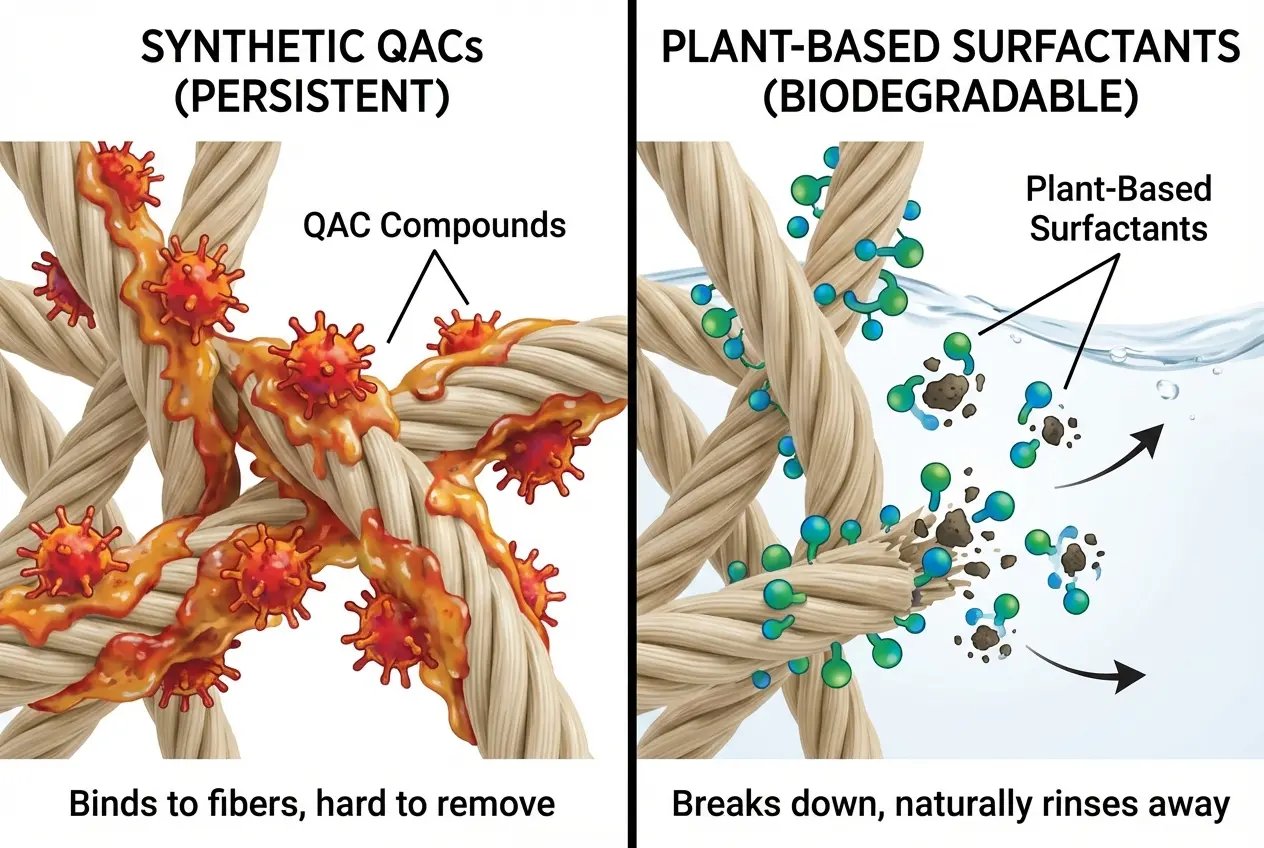
No QACs. No phthalates. No bleach. No ammonia. No persistent chemical reservoirs.
Just effective cleaning that doesn't poison the surfaces your family touches most.
Protect Your Family From Cumulative Exposure →
What Life Looks Like After Making The Switch
One month after families switch from spray bottles to dissolvable sheets, a pattern emerges.
The house is still clean.
Surfaces still sparkle. Floors still shine. Bathrooms are still spotless.
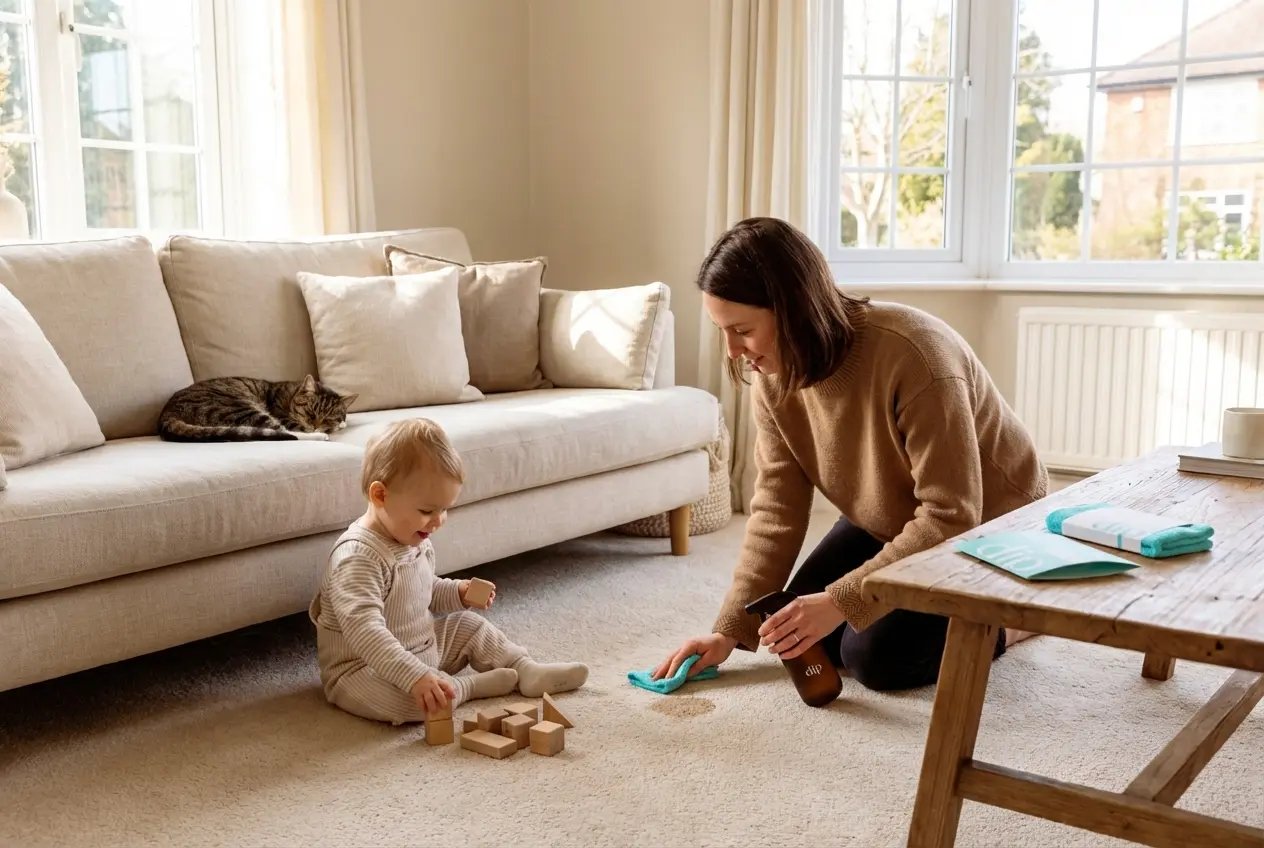
But something fundamental changes:
 No chemical smell lingering in the air after cleaning
- No irritated throats
- No need to open windows to "air out" rooms
- No worry about toddlers on carpets cleaned yesterday
- No concern about cats grooming their paws after walking on floors
- No second-guessing every wipe-down of the high chair
Just clean homes that are actually safe for your babies, toddlers, and pets.
The Brand 60,000+ UK Families Trust
The company behind these sheets is called Dip.
They exist to expose the hidden health risks in the home cleaning industry and provide better, safer alternatives.
For decades, the category has normalised toxic chemicals and misleading claims, while wellness and beauty moved forward.
Dip was founded to challenge this - proving that healthier homes are possible without compromise.
Since launching, over 60,000 UK families have switched to Dip products.

"Easy to use, effective and kind to humans and the planet. Well done Dip!👍🏻 What a great product. "
—Deirdre B."Great product smells lovely and cleans great. Have been using for sometime. Love Dip washing sheets.
— Margaret K"This is a really great product, quite amazed at how well it cleans I use it in my air fryer as well as the cooker top & it removes stains very well. It’s great for stains on rugs too."
— Lisa T.As Featured In
What You Get And What It Costs
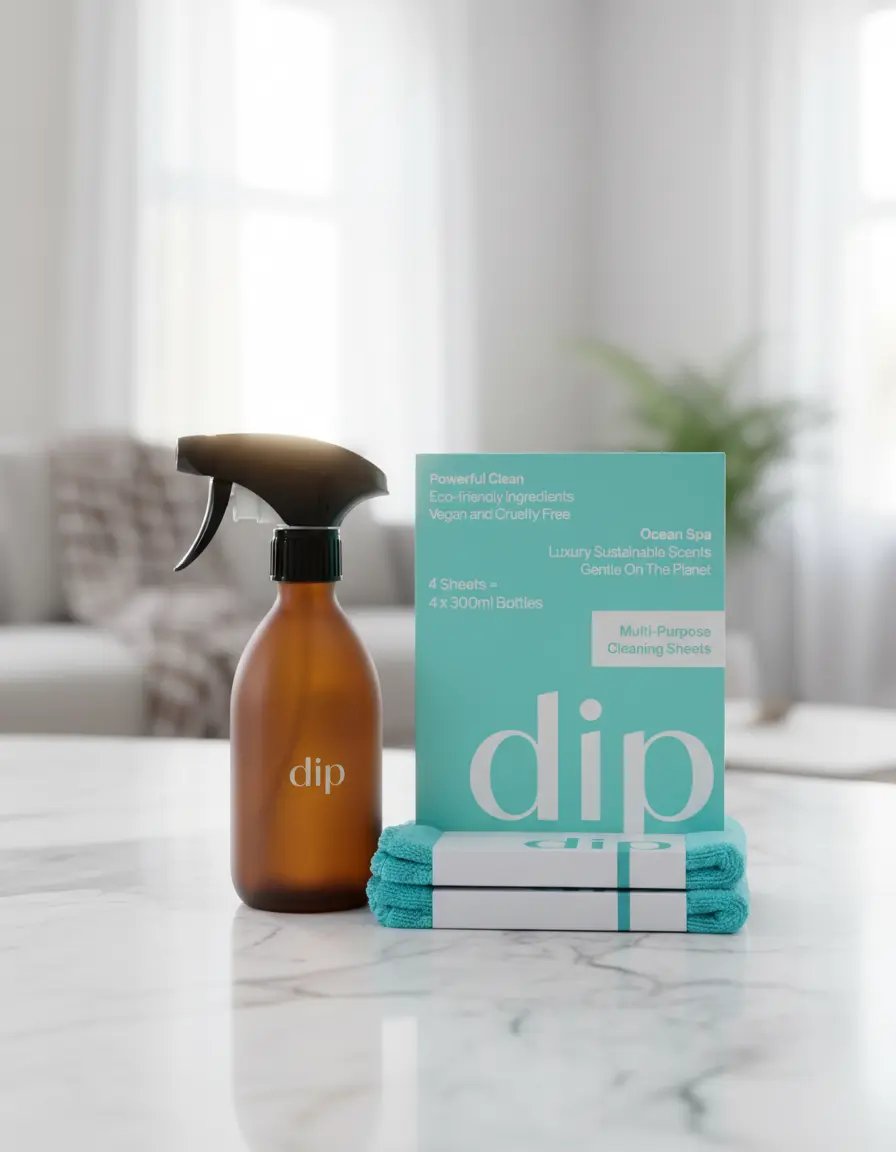
Dip's Starter Pack costs £15 and here's what it includes:
- 4 Multi-Purpose Cleaning Sheets - each sheet dissolves in water to make a full 300ml bottle of ultra-concentrated all-purpose cleaner. That's 4 bottles worth of cleaner in total.
- One reusable glass spray bottle (£15 retail value) that lasts for years.
- One premium microfibre cloth (£5 retail value) for effective cleaning.
- 100% plastic-free, fully compostable packaging.
- One formula that works on every surface: glass, wood, stone, metal, fabric, upholstery, carpet.
4-Month Starter Pack
£15Just £3.75 per bottle of cleaner
Get Your First Pack -
100% Money-Back Guarantee →
The Math That Makes This Decision Obvious
Compare to what typical UK households currently spend on cleaning products:
| Product | Typical Cost |
|---|---|
| Multi-surface spray | £4-6 |
| Glass cleaner | £4-5 |
| Bathroom cleaner | £5-7 |
| Fabric cleaner | £6-8 |
| Floor cleaner | £4-6 |
| Total | £23-32/month |
For that £23-32, households get:
- Multiple single-use plastic bottles heading to landfill
- Mostly water with tiny percentages of active ingredients
- QACs that linger in porous surfaces for months
- Fragrances hiding hormone-disrupting phthalates
- Spray mechanisms creating fine particle clouds everyone breathes
Dip: £3.75 per bottle.
No compromises. No trade-offs between "effective" and "safe."
Try The 4-Month
Starter Pack Risk-Free
Join 60,000+ UK families who've made the switch to safer cleaning. Complete starter kit with everything you need.
Get Your Starter Pack - £15
 100% Money-Back Guarantee
The Guarantee
Dip backs their sheets with a 100% Money-Back Guarantee.
Order the starter pack today. Use the sheets on every surface in your home - carpets, sofas, high chairs, floors, counters, glass, everything.
If you're not satisfied for any reason, just email [email protected].
No questions asked. Full refund.
You risk nothing. Your family gains everything.
We can offer this guarantee because we know what happens when families eliminate chemical reservoirs from their homes. The vast majority never go back to spray bottles.
Not because sheets are trendy or because people want to feel "eco-conscious."
Because once you clean without breathing chemical mist, without worrying about children touching surfaces, without that lingering artificial smell... you realise how abnormal the old way actually was.
What you thought was "clean" was actually just "covered in chemicals."
And you can't unsee it.
What Happens If Nothing Changes
The research is clear. The mechanisms are understood. The exposure pathways are documented.
Right now, babies across the UK are crawling on carpets with 9-month-old chemical residues soaking in fibres.
They're putting their hands in their mouths 81 times every hour.
Every surface they touch transfers chemicals onto their skin, then into their mouths, then into their developing bodies.
Pets are walking on mopped floors, lying on treated furniture, licking their paws - ingesting whatever chemical residues coat their fur.
Every spray adds another layer to the chemical reservoir.
Another coating that will remain for months. Another cloud of particles everyone will breathe.
The damage is cumulative, gradual and hidden.
By the time symptoms appear… The persistent cough, The diagnosed asthma, The unexplained health issues in pets… it's years past the point where prevention was possible.
But here's what's known right now:
The research exists. The exposure pathways are documented. Conventional cleaning products create chemical reservoirs that persist for months.
Children touch their mouths 81 times per hour. 94% of cats exposed to QACs develop symptoms.
The information is available.
60,000 UK families have already made the switch.
Many say: "I wish I'd known about this years ago."
How To Get Started
Click the button below to go to Dip's website and order the 4-Month Starter Pack.
£15. Includes 4 cleaning sheets, glass bottle, microfibre cloth.
Ships in plastic-free packaging within 2-3 business days.
When it arrives: drop one sheet into the bottle, fill with tap water, shake for 30 seconds. Ready to clean.
One sheet makes one full 300ml bottle of cleaner. Works on every surface - glass, wood, stone, metal, fabric, carpet, upholstery.
No spray mist. No persistent chemicals. No choosing between effective and safe.
Just clean surfaces that are safe for your family to touch.
Not satisfied? Money back. No questions.
The Decision Point
Right now, somewhere in the UK, a child is touching a surface that was cleaned with conventional spray.

 FREE Next-Day UK Delivery
 100% Plastic-Free & Compostable
 Trusted by 60,000+ UK Families
Dip - Plant-Based Cleaning Sheets
Trusted by 60,000+ UK Families | Recommended by Health Experts